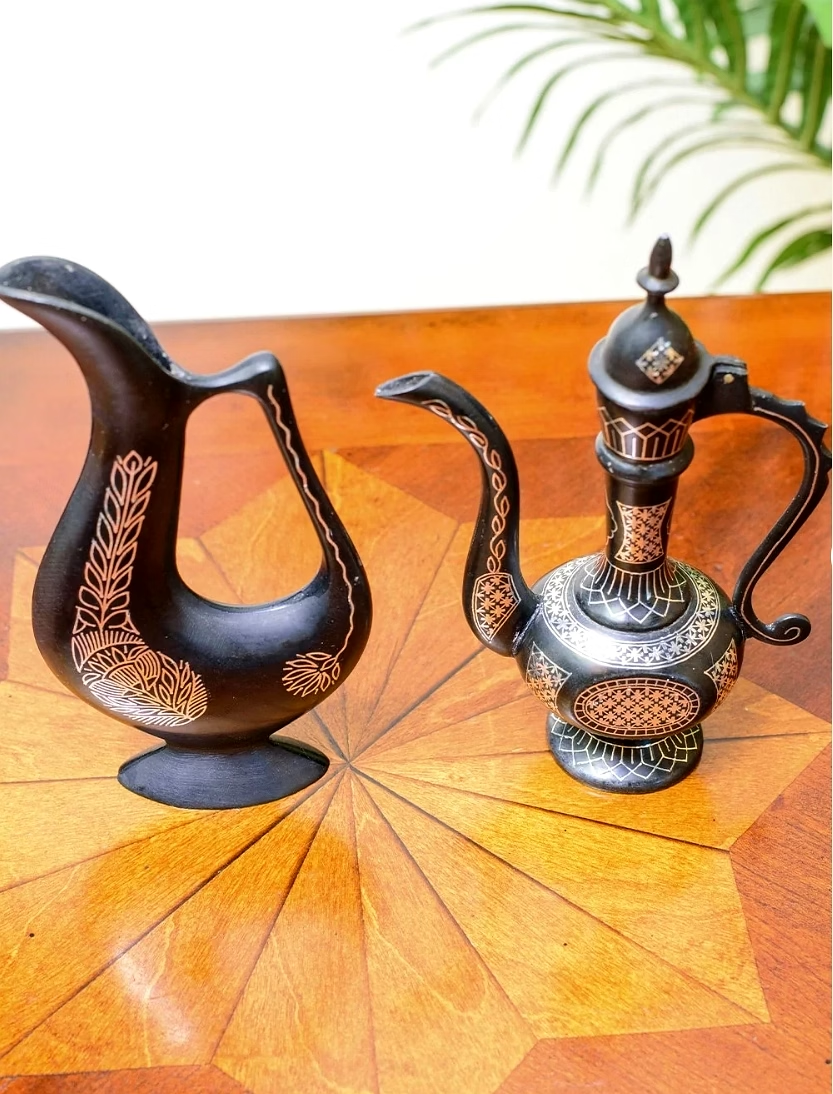
This exquisite set of two Hand Crafted Bidri Art Jugs showcases the rich heritage and intricate craftsmanship of Bidriware metal handicraft from Karnataka, India. Each jug is uniquely crafted from a blackened alloy of zinc and copper, meticulously inlaid with pure silver, resulting in striking traditional Arabian-inspired patterns that reflect a blend of Turkish, Persian, and Arabic influences. The set includes two jugs with dimensions: Jug 1 - Length 2.4" x Height 6.2" x Width 3.3" and Jug 2 - Length 4" x Height 6.7" x Width 2". These jugs are not merely decorative items but are cultural artifacts rooted in the 14th century Bahamani Sultanate era, symbolizing luxury and artistic refinement. The artisan's skill is evident in every silver inlay, making each piece a unique collector's item suitable for premium home decor, corporate gifting, and curated handicraft collections. By sourcing directly from authentic craftsmen, this product supports traditional artisan livelihoods and preserves a centuries-old craft heritage. Ideal for B2B buyers such as boutique retailers, specialty decor stores, and cultural exhibition curators seeking genuine Indian handicrafts with historical significance.
Key Features
| Features | Description |
|---|---|
| Craftsmanship | Handcrafted Bidri metalwork with pure silver inlay |
| Material | Blackened alloy of zinc and copper with pure silver sheets |
| Design Style | Traditional Arabian jugs showcasing Turkish, Persian & Arabic influences |
| Set Quantity | Set of 2 Jugs |
| Dimensions Jug 1 | Length 2.4 inches x Height 6.2 inches x Width 3.3 inches |
| Dimensions Jug 2 | Length 4 inches x Height 6.7 inches x Width 2 inches |
| Origin | Karnataka, India - Bidriware craft tradition since 14th century |
| Use Case | Premium home decor, cultural collections, corporate gifting |
| Artisan Support | Sourced through direct partnerships with Indian artisans |
| Cultural Significance | Symbol of luxury and heritage rooted in Bahamani Sultanate era |
| Attributes | Description |
|---|---|
| Crafting Technique | Silver inlay on blackened metal alloy |
| Metal Composition | Zinc and copper alloy with pure silver inlay |
| Craft Origin | Bidriware from Karnataka, India |
| Historical Period | 14th Century C.E. during Bahamani Sultanate |
| Artisan Involvement | Handcrafted by skilled Bidri artisans |
| Finish | Matte blackened metal surface with polished silver patterns |
| Weight | Individual weights vary based on size and inlay |
| Packaging | Carefully packed for safe transit to retain finish and detail |
| Maintenance | Avoid abrasive cleaning; wipe with dry soft cloth to preserve finish |
| Intended Market | B2B buyers including retailers and cultural exhibitors |
*Disclaimer: The above description has been AI-generated and has not been audited or verified for accuracy. It is recommended to verify product details independently before making any purchasing decisions.
These jugs are crafted from a blackened alloy of zinc and copper with intricate inlays of pure silver, characteristic of traditional Bidriware.
Jug 1 measures 2.4" length x 6.2" height x 3.3" width, whereas Jug 2 is slightly taller and narrower at 4" length x 6.7" height x 2" width.
Bidriware originated in the 14th century during the Bahamani Sultanate, blending Persian, Turkish, and Arabic influences. It was traditionally a royal craft symbolizing wealth, with pure silver inlay on blackened metal alloys.
Avoid abrasive cleaning; gently wipe the surface with a dry soft cloth to maintain the matte blackened finish and bright silver inlay without damage.
Primarily intended as premium decorative art pieces and collectibles, these jugs may not be suitable for regular functional use with liquids due to their delicate silver inlay.
Country Of Origin: India
Jug - Length - 2.4" x Height - 6.2" x Width - 3.3" ;
Jug - Length - 4" x Height - 6.7" x Width - 2"
Bidri Craft Curio - Arabian Jugs (Set of 2). Bidriware is a metal handicraft from Karnataka, developed in the 14th century C.E. during the rule of the Bahamani Sultans. Due to its striking pure silver inlay artwork, Bidriware was always considered to be a prized possession. The metal used is a blackened alloy of zinc and copper inlaid with thin sheets of pure silver.
Bidriware is a metal handicraft from Karnataka, developed in the 14th century C.E. during the rule of the Bahamani Sultans. Due to its striking inlay artwork, Bidriware is prized as a symbol of wealth. The metal used is a blackened alloy of zinc and copper inlaid with thin sheets of pure silver. Bidriware originated in ancient Persia and is a mix of Turkish, Persian & Arabic influences, intermingled with local styles from which a unique craft form was born. Abdullah bin Kaiser, a craftsman from Iran was invited by the Sultan Ahmed Shah Bahmani to work on decorating the royal palaces and courts. It is rumoured that Kaiser integrated his skills with those of the local craftsmen, giving rise to a unique craft form, ‘Bidri’ under the rule of Second Sultan Alauddin Bahmani.
Over the years, we have cultivated direct relationships with a wide network of artisans and craft centric enterprises across the country. Our primary mission is to empower the Indian artisan and do our bit in contributing to the sustenance of artisan livelihoods as also the preservation of an amazing craft heritage.