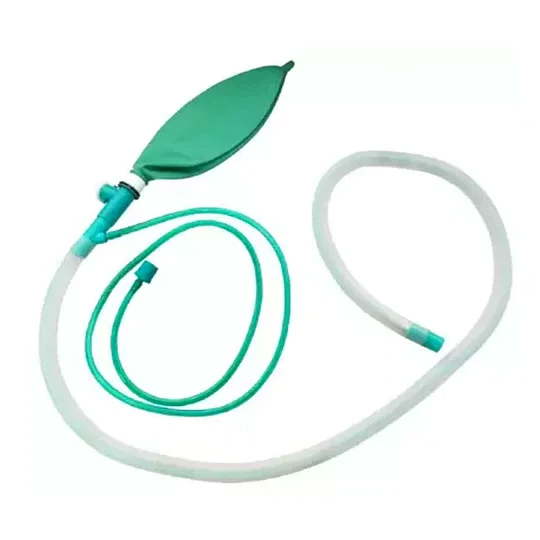
The Bain Circuit is a specialized breathing system designed primarily for delivering anesthetic gases to patients while simultaneously removing exhaled carbon dioxide. It features a unique coaxial design, where an inner tube transports fresh gases directly to the patient's airway, and an outer corrugated tube acts as an exhaust for expired gases, effectively preventing rebreathing. Ideal for anesthesia delivery in medical and surgical settings, the Bain Circuit is compact, cost-effective, and constructed to minimize dead space and resistance to breathing. Additionally, it supports efficient scavenging of waste anesthetic gases, enhancing workplace safety for healthcare providers.
Key Features
| Features | Description |
|---|---|
| Design | Coaxial tube design with inner fresh gas delivery and outer exhalation pathway |
| Dead Space | Low dead-space design reduces retention of exhaled gases |
| Breathing Resistance | Minimized resistance to facilitate easier breathing for patients |
| Waste Gas Scavenging | Supports efficient removal of residual anesthetic gases to the environment |
| Cost Efficiency | Inexpensive and compact making it accessible for various healthcare setups |
| Compatibility | Compatible with standard anesthesia machines and ventilation setups |
| Safety | Prevents rebreathing of carbon dioxide during anesthesia |
| Material | Durable corrugated outer tubing with smooth inner tube for gas delivery |
| Attributes | Description |
|---|---|
| Inner Tube Diameter | Approximately 4-5 mm (varies by manufacturer) |
| Outer Tube Diameter | Approximately 12-15 mm (varies by manufacturer) |
| Length | Typically ranges from 1.2 to 2 meters |
| Material | Medical-grade PVC or silicon for flexibility and durability |
| Compatible Gas Flow Rate | High fresh gas flow typically exceeding 6 liters per minute |
| Connection Type | Standard 15 mm ISO connectors |
| Weight | Lightweight, approximately 150-300 grams depending on size |
| Application | Used for delivery of anesthetic gases and CO2 washout during controlled or assisted ventilation |
*Disclaimer: The above description has been AI-generated and has not been audited or verified for accuracy. It is recommended to verify product details independently before making any purchasing decisions.
The Bain Circuit employs a coaxial design where fresh gas flows through an inner tube directly to the patient, while exhaled gases exit via the outer corrugated tube, ensuring that exhaled CO2 does not mix with the fresh gas, thus preventing rebreathing.
High fresh gas flow rates, typically exceeding 6 liters per minute, are recommended to ensure adequate delivery of anesthetic gases and effective CO2 washout while using the Bain Circuit.
Yes, the Bain Circuit uses standard 15 mm ISO connectors making it compatible with most conventional anesthesia machines and ventilation setups.
The Bain Circuit tubing is typically made from medical-grade PVC or silicone, providing the necessary flexibility, durability, and safety required for medical gas delivery in anesthesia.
Yes, the design of the Bain Circuit allows for effective scavenging of exhaled anesthetic gases, helping to maintain a safe operating environment by reducing occupational exposure.
Bain circuits use a high fresh gas flow to deliver anesthetic gases to the patient's airway and to wash out the exhaled carbon dioxide. - An inner tube delivers fresh gases and an outer corrugated tube serves as the outlet for exhaled gases. A Bain circuit ensures that there is no re-breathing of the exhaled gases.
✦ Compact and inexpensive with low dead-space
✦ Low resistance to breathing
✦ Facilitates scavenging of waste gases
Inclusive of all taxes
You Save: 0
Surat , India
Manufacturer, Professional Services, Brand Owner, Distributor, Exporter, Importer