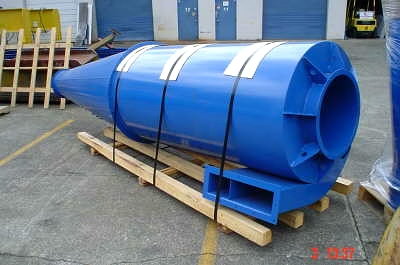
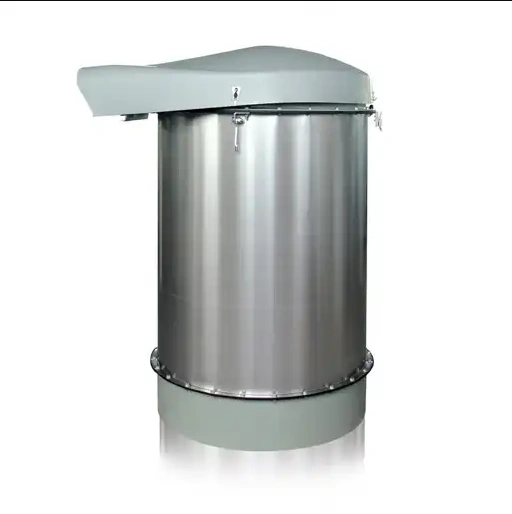
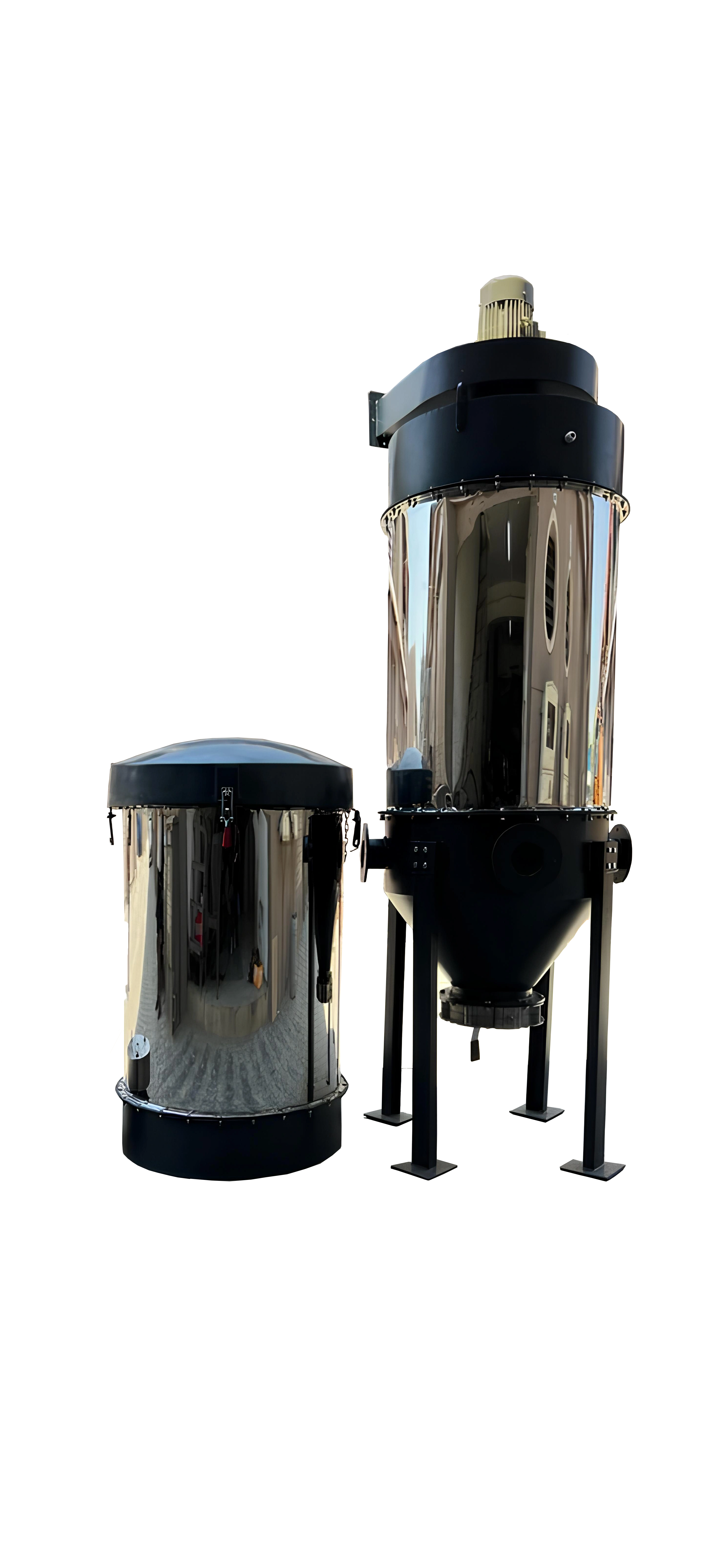
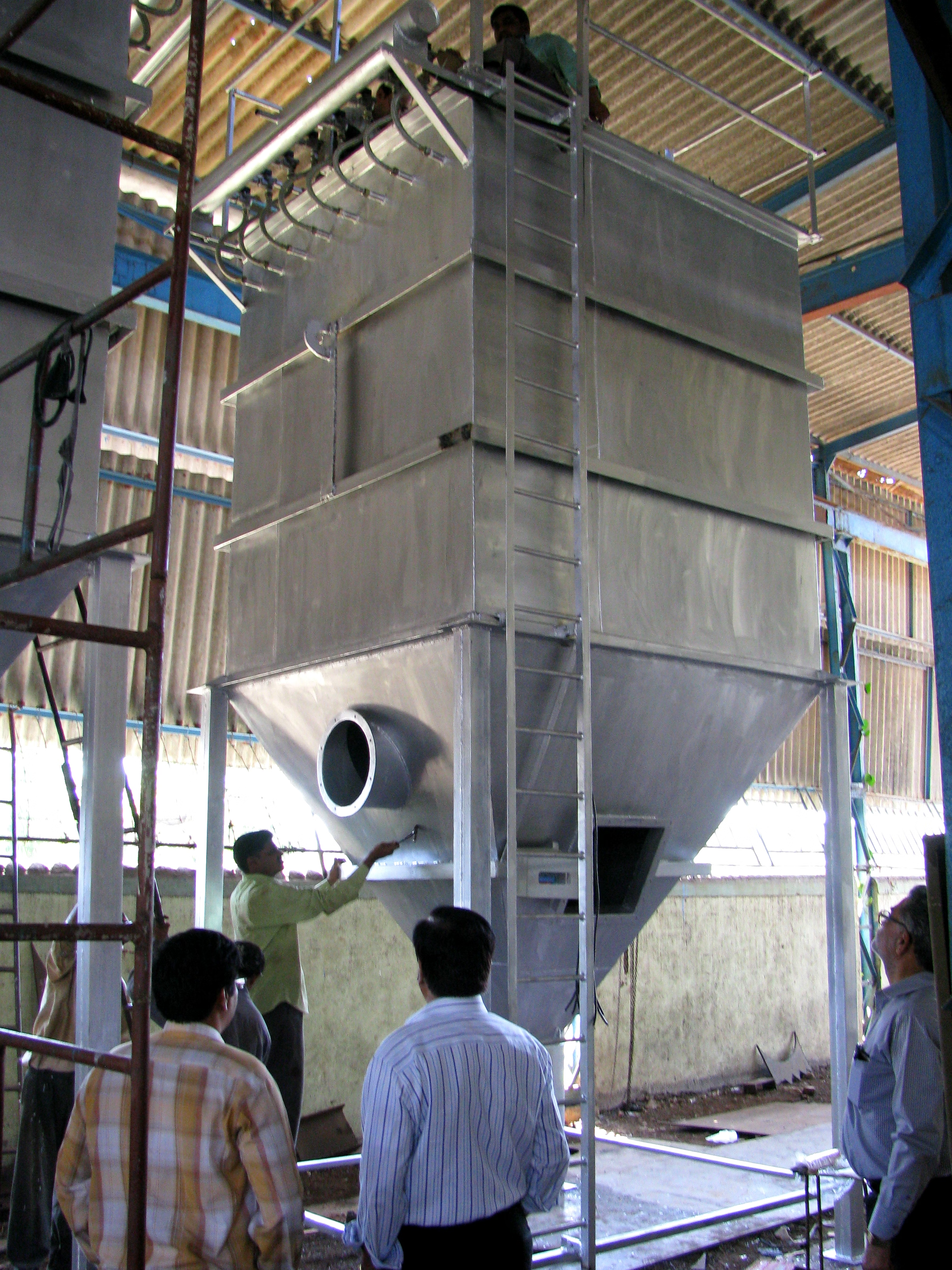
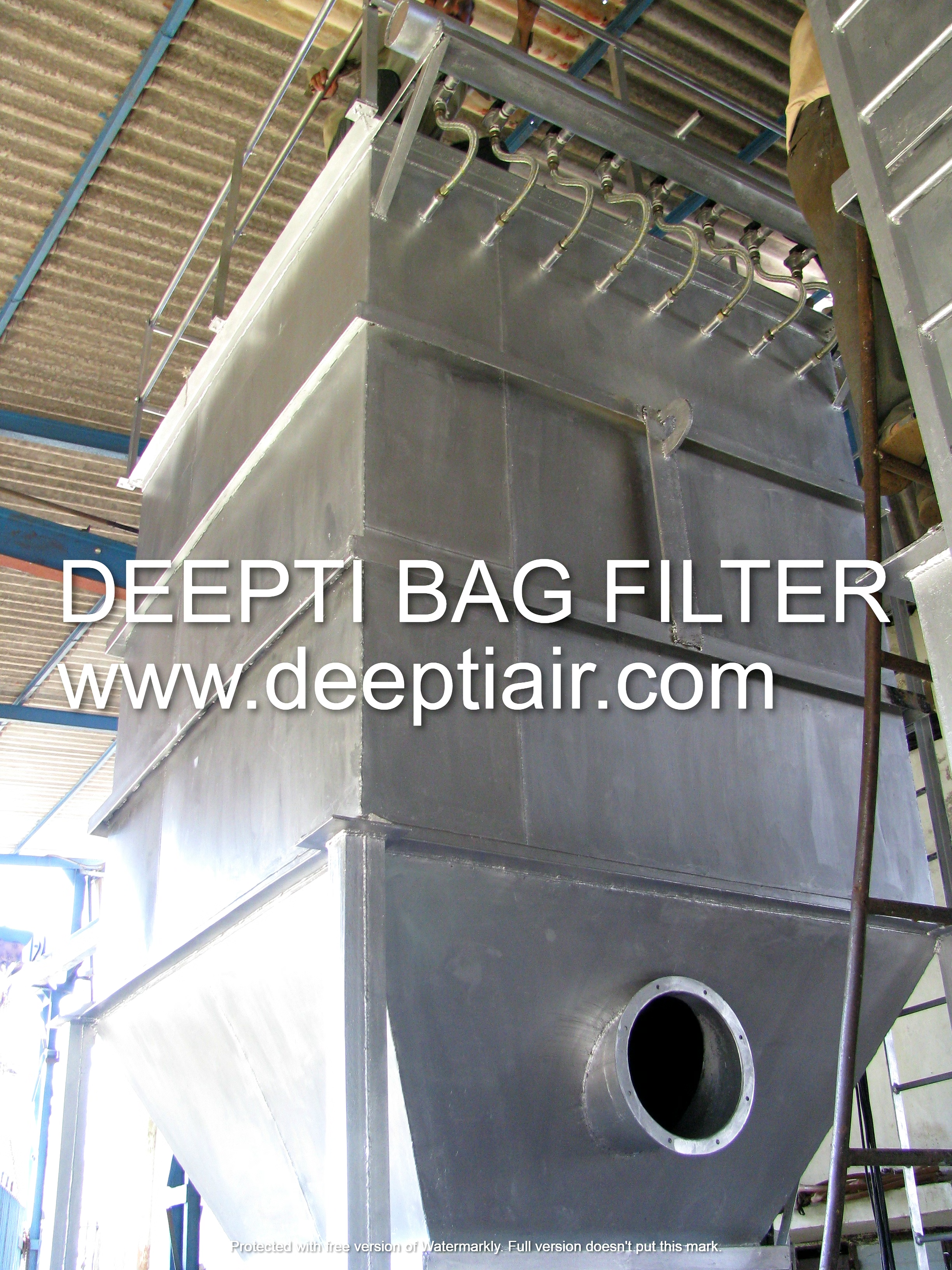
The Bag Filter Dust Collector is an advanced fabric filtration system designed for efficient removal of particulate matter from industrial air streams. It employs high-quality filter media such as filter bags, cartridges, or envelope filters that trap fine dust particles, ensuring clean air output. This dust collector integrates essential components including a precisely engineered inlet duct to optimize air velocity, a separation chamber for effective dust removal through fabric filtration, and a conically shaped collection hopper for easy dust discharge. Equipped with a reliable cleaning mechanism, typically pulse-jet or reverse air cleaning, it maintains filter media efficiency and reduces pressure drop, ensuring operational consistency. Suitable for dry dust collection applications, the Bag Filter Dust Collector is customizable in vertical or horizontal configurations to accommodate spatial constraints in industrial setups. It is an ideal solution for industries requiring high dust collection efficiency, low maintenance, and adaptability to varying operational conditions.
Key Features
| Features | Description |
|---|---|
| Filtration Mechanism | Uses fabric filter media (filter bags, cartridges) for high-efficiency particulate capture |
| Dust Collection Method | Dry dust collection with conical collection hopper for easy dust discharge |
| Cleaning System | Pulse-jet or reverse air cleaning mechanism to maintain filter efficiency |
| Installation Configurations | Available in vertical and horizontal orientations for installation flexibility |
| Component Design | Includes optimized inlet duct, separation chamber, clean air plenum, and clean air outlet |
| Operational Efficiency | Maintains low pressure drop and high collection efficiency across diverse industrial conditions |
| Application Suitability | Ideal for industrial dry dust removal where fine particle filtration is required |
| Attributes | Description |
|---|---|
| Dust Collector Type | Fabric Filter (Baghouse) |
| Dust Collection Medium | Dry |
| Filter Media Material | Filter bags, cartridges, envelope filters of various materials |
| Cleaning Mechanism Options | Pulse-jet, reverse air, or mechanical shaking |
| Installation Type | Vertical or Horizontal configurations |
| Dust Discharge Method | Collection hopper discharge via rotary valves, screw conveyors, or pneumatic systems |
| Application Sector | Industrial air pollution control (foundries, cement plants, chemical industry, etc.) |
| Air Flow Optimization | Inlet duct design for optimal velocity and minimal turbulence |
*Disclaimer: The above description has been AI-generated and has not been audited or verified for accuracy. It is recommended to verify product details independently before making any purchasing decisions.
This Bag Filter Dust Collector supports pulse-jet cleaning, reverse air cleaning, and mechanical shaking to maintain optimal filter media performance.
Yes, the collector is available in vertical configuration which is ideal for installations with limited floor space.
It is best suited for fine particulate dust in dry industrial air streams, commonly found in cement plants, foundries, and chemical processing industries.
The inlet duct is engineered to maintain optimal air velocity and minimize turbulence, facilitating effective particle separation in the separation chamber.
Dust discharge from the collection hopper can be managed via rotary valves, screw conveyors, or pneumatic conveying systems depending on application requirements.
Country Of Origin: India
a) Mechanical Dust Collectors:
Gravity Dust Collectors: Utilize gravitational settling of particles.
Inertial Force Dust Collectors: Employ sudden changes in airflow direction.
Centrifugal Force Dust Collectors: Use rotational forces to separate particles.
b) Electrostatic Precipitators (ESP): Employ electrostatic charges to capture particles.
c) Fabric Filter Dust Collectors: Use filter media to trap particulates.
d) Wet Scrubbers: Involve liquid to capture and remove dust particles.
Classification by Installation Configuration:
a) Vertical Dust Collectors: Oriented upright, often used in limited floor space applications.
b) Horizontal Dust Collectors: Configured laterally, suitable for installations with height restrictions.
Classification by Dust Removal Medium:
a) Dry Dust Collectors: Operate without the involvement of liquids.
Examples: Cyclones, baghouses, and electrostatic precipitators.
b) Wet Dust Collectors: Utilize liquids in the dust removal process.
Examples: Venturi scrubbers, spray towers, and wet dynamic separators.
Each type of dust collector offers specific advantages and is selected based on factors such as particle size distribution, gas stream properties, collection efficiency requirements, and operational conditions. The choice of dust collector significantly impacts the overall performance and efficiency of air pollution control systems in industrial processes.
A dust collector system comprises several key components, each playing a crucial role in the efficient removal of particulate matter from industrial air streams. The main components include:
Inlet duct: A specially designed entry point that introduces the contaminated air into the system. This inlet is engineered to maintain optimal air velocity and minimize turbulence, ensuring efficient particle separation.
Separation chamber: Also known as the dust removal space or dust removal room, this is the core component where solid-gas separation occurs. Depending on the type of dust collector, this chamber may utilize various mechanisms such as centrifugal force, fabric filtration, or electrostatic precipitation to separate dust particles from the air stream.
Collection hopper: Located at the bottom of the separation chamber, this component collects and temporarily stores the separated dust particles. It is typically designed with a conical shape to facilitate easy dust discharge.
Dust outlet: A discharge mechanism that removes the accumulated dust from the collection hopper. This may include rotary valves, screw conveyors, or pneumatic conveying systems, depending on the dust properties and system requirements.
Clean air plenum: A chamber that collects the filtered air after dust removal. This space ensures even distribution of airflow and helps maintain system pressure balance.
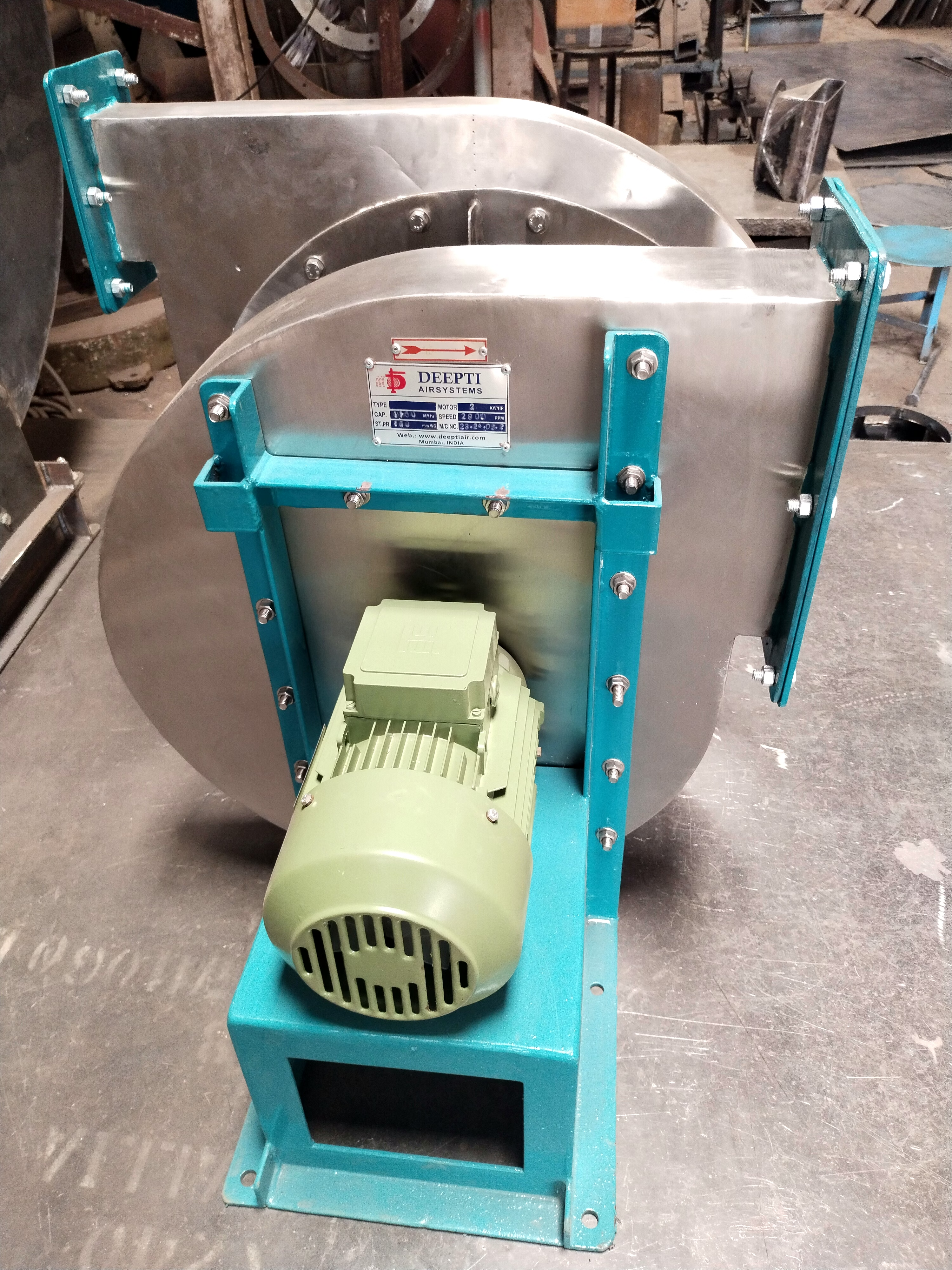
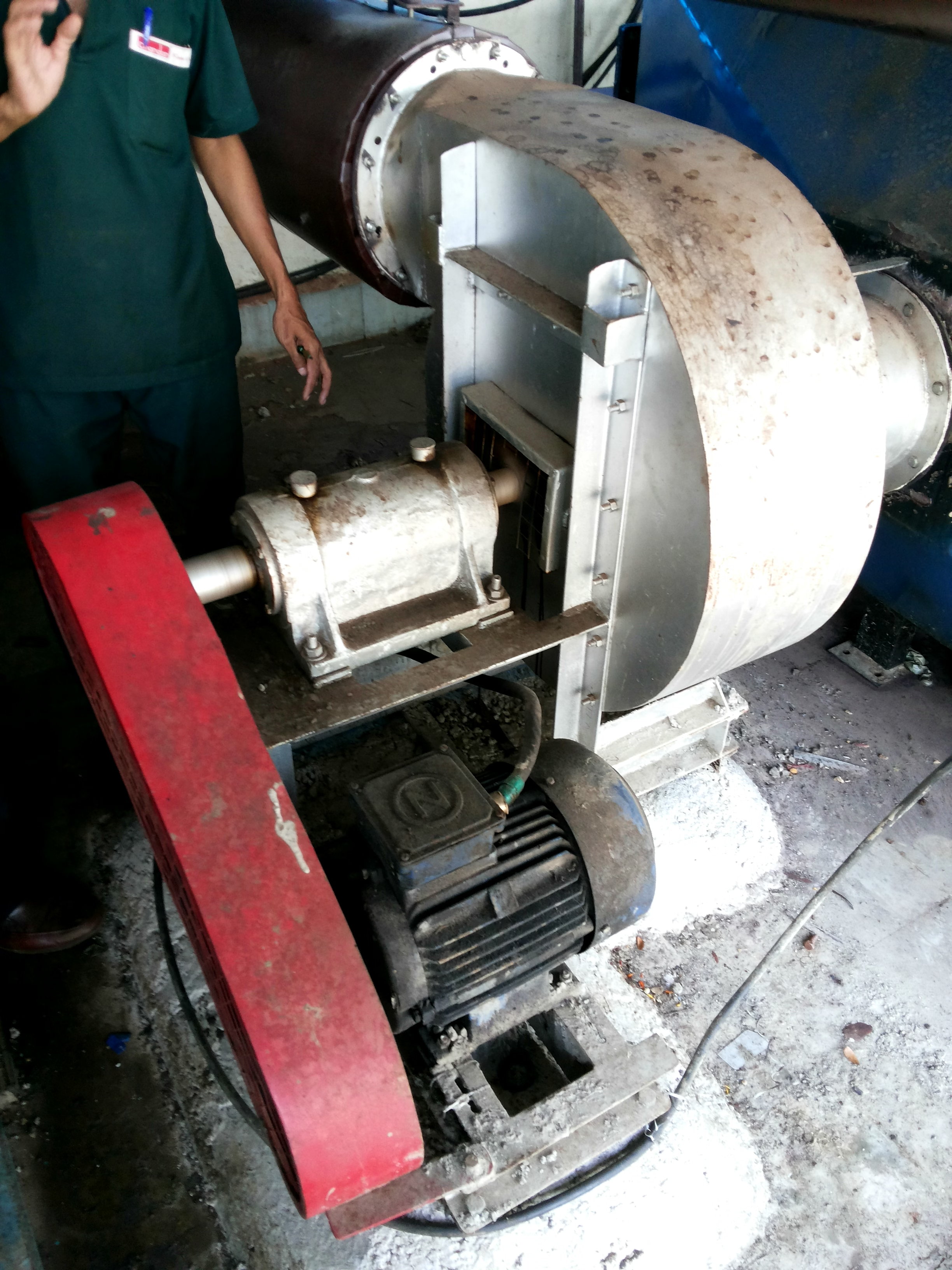
Clean air outlet: The exit point for the filtered air, typically equipped with a fan or blower to maintain the required airflow through the system. This outlet may be connected to ductwork for recirculation or vented to the atmosphere, depending on the application.
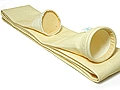
Filter media: In fabric filter systems, this component is crucial for capturing fine particles. It may consist of filter bags, cartridges, or envelope filters made from various materials suited to the specific dust properties and operating conditions.
Cleaning mechanism: A system to periodically clean the filter media, preventing excessive pressure drop and maintaining collection efficiency. This may include pulse-jet cleaning, reverse air cleaning, or mechanical shaking, depending on the dust collector design.