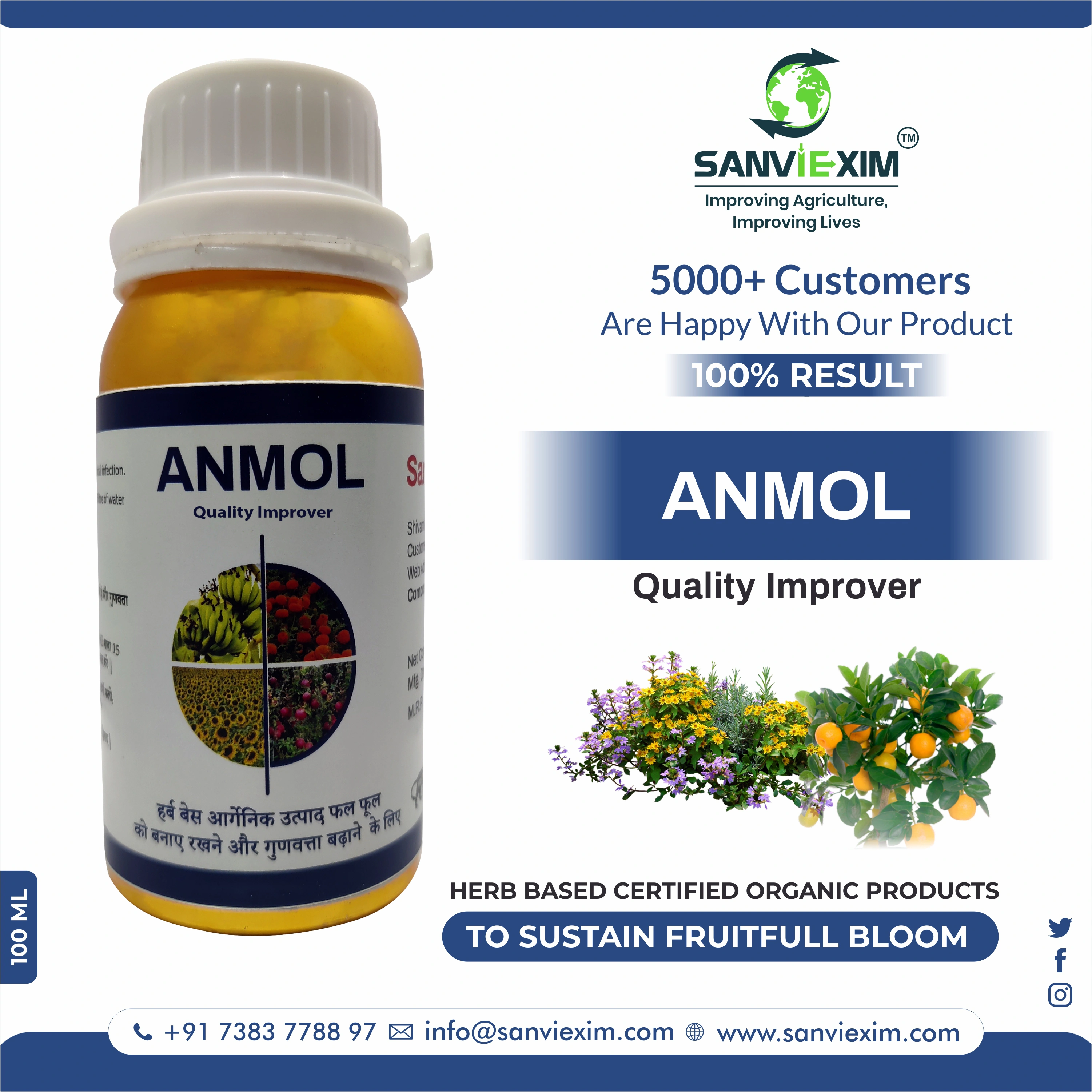
Anmol is a groundbreaking broad-spectrum antimicrobial organic agent designed specifically for crop protection against plant pathogenic fungi and bacteria. Invented in India, Anmol is derived from plant origins, ensuring it is safe for human health while effectively combating various fungal infections in plants, a condition medically referred to as Mycosis. The major types of Mycosis that Anmol addresses include superficial, systemic, and opportunistic infections. Anmol works by disrupting the fungal cell membrane through binding to ergosterol, leading to cell death due to the leakage of intracellular ions and macromolecules. Beyond its fungicidal properties, Anmol exhibits bacteriostatic action, providing both curative and protective capabilities against pathogens. Unlike harmful antifungal agents like Imidazole and Triazoles, Anmol is safe for use in open fields, effectively inhibiting all plant pathogenic bacteria while stimulating the plant's immune response through the enhancement of secondary metabolites and alkaloids. Anmol is suitable for a range of crops, including cotton, rice, wheat, various fruits, vegetables, and flowers.
Key Features
| Features | Description |
|---|---|
| Origin | Plant-derived organic agent |
| Spectrum | Broad-spectrum antimicrobial |
| Health Safety | Safe for human health |
| Mechanism of Action | Disrupts fungal cell membranes by binding to ergosterol |
| Applications | Suitable for various crops including fruits, vegetables, and flowers |
| Type of Activity | Curative and protective |
| Antibiotic Properties | Controls all plant pathogenic bacteria |
| Attributes | Description |
|---|---|
| Fungal Infection Type | Mycosis (Superficial, Systemic, Opportunistic) |
| Target Crops | Cotton, Groundnut, Rice, Wheat, Sunflower, Apple, Lemon, Strawberry, and more |
| Environment Compatibility | Can be used in open fields |
| Antifungal Resistance | Non-toxic, unlike Imidazole or Triazole agents |
| Application Method | Spraying on crops |
| Plant Health Enhancement | Boosts plant secondary metabolites and alkaloids |
*Disclaimer: The above description has been AI-generated and has not been audited or verified for accuracy. It is recommended to verify product details independently before making any purchasing decisions.
Anmol effectively combats various types of fungal infections classified as Mycosis, including superficial, systemic, and opportunistic infections.
Yes, Anmol is versatile and can be applied to a wide range of crops including cotton, rice, fruits, vegetables, and ornamental plants.
Anmol is a plant-derived organic fungicide that is safe for human health, whereas Imidazole and Triazoles are often toxic and can have harmful side effects.
Anmol binds to ergosterol in fungal cell membranes, disrupting their integrity and leading to cell death by causing leakage of intracellular contents.
Anmol boosts the plant's endogenous system by stimulating the production of secondary metabolites and plant alkaloids, which helps maintain overall plant health.
Anmol is first broad spectrum antimicrobial organic agent for crops invented first in India for against plant pathogenic fungi and bacteria. Novel antimicrobial agent.
Anmol is of plant origin. It is extracted from plants and safe for human health.
It is a selective fungicidal and bactericidal organic agent.
Disrupt fungal cell membrane by binding to ergosterol, so alters the permeability of the cell membrane leading to leakage of intracellular ions & macromolecules (Cell death).
Somehow it has bacteriostetic action also. Fungal infection in plants = Mycosis.
Major type of mycoses : 1. Superficial, 2. Systemic, 3. Opportunistic. These symptoms vary from superficial to plant life threatening.
Anmol is curative and protective both type of activities from pathogen. Anmol is antibiotic first broad spectrum antibacterial agent which controls all plant pathogenic bacteria, and can use in open field to spray.
There are many antifungal Agents but are not safe for human life like. . .. Imidazole and Triazol.
It inhibits the enzyme cytochrome P450 14c-demethylase. This enzyme converts lanosterol to ergosterol, and is required in fungal cell membrane synthesis, and inhibited steroids synthesis in human.
Imidazole are not safe for humans like Miconazole, Bifonazole, Ketoconazole, Butoconazole, Clotrimazole, Econazole, Mebendazole, Fenticonazole, Isoconazole, Oxiconazole, Sertaconazole, Sulconazole, Thiabendazole, Tiaconazole.
Antifungal agents triazoles are also toxic. Ex...Fluconazole, Itraconazole, Ramconazole, Posaconazole, Voriconazole.
So, Anmol makes endogenous boosting of plant system like plant secondary metabolites and plant alkaloids. It gives broad spectrum protection plant from fungal, bacterial pathogens and keeps plant healthy.Use for following crops:
Crops: Cotton, Groundnut, Castor, Bajra, Till, Rice, Wheat, Sunflower, Ginger, Potato, Tobacco, Cumin, Dill seed etc. Fruits: Apple, Lemon, Citrus, Orange, Mango, Guava, Chiku, Strawberry, Pomegranate, Kaju, Almonds, Grapes etc. Orchards: Tea, Coffee, Coco, Black Pepper etc. Vegetables: Watermelon, Chili, Brinjal, ladies finger, cucurbits etc. Flowers: Gerbera, Rose, Orchid, Mogra, Jasmine, Champa, Sunflower etc.