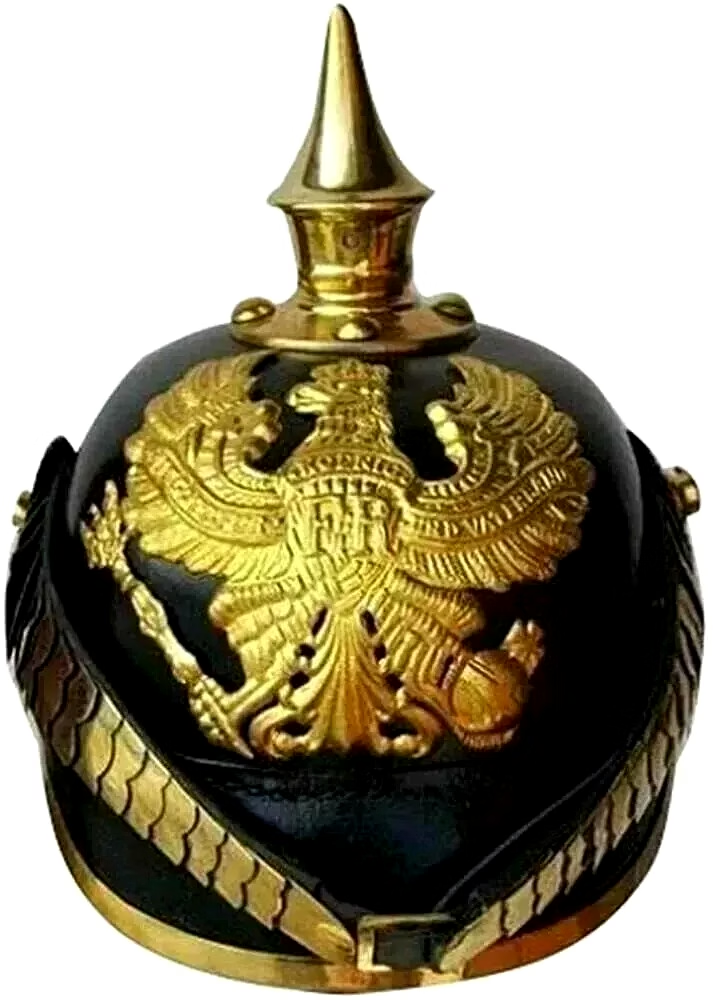
The Ancient Pickelhaube Helmet is a historically authentic reproduction of the iconic German military headgear originally worn by the Prussian Army from the mid-19th century through World War I. Characterized by its distinctive pointed spike or finial designed to deflect sword blows, this helmet captures the essence of Prussian military heritage with premium craftsmanship. Constructed from meticulously selected materials—either genuine leather mimicking early models or durable steel representing later versions—this piece features authentic details like national cockades, regimental badges, and adjustable leather chin straps that ensure comfort and secure fit. With approximate dimensions of 7-8 inches in height and width, it reflects the original sizing and weight (1-2 pounds for leather, 3-4 pounds for steel). Additional historically accurate features include ventilation holes for airflow and optional neck guards found in certain models. Ideal for museums, reenactors, historical collectors, or B2B clients specializing in military memorabilia, this Ancient Pickelhaube Helmet combines functionality, heritage, and collectible value in one authentic piece. Regular maintenance such as cleaning and leather conditioning preserves its polished finish, further enhancing long-term value.
Key Features
| Features | Description |
|---|---|
| Distinctive Spike/Finial | Pointed spike designed originally to deflect sword blows |
| Material Construction | Available in genuine leather (early model) and steel (later models) |
| National Cockade and Regimental Badge | Authentic insignia representing allegiance and unit |
| Adjustable Chin Strap | Leather chin strap for secure and comfortable fit |
| Dimensions | Height and width approximately 7-8 inches (18-20 cm) |
| Weight | Leather helmets weigh 1-2 lbs; steel helmets weigh 3-4 lbs |
| Ventilation | Ventilation holes or slots for improved airflow on select models |
| Neck Guard | Optional neck guard feature on specific historical variants |
| Historical Variants | Includes Prussian, German Empire, and WWI model reproductions |
| Usage | Ideal for collectors, museums, reenactors, and military memorabilia businesses |
| Attributes | Description |
|---|---|
| Helmet Type | Pickelhaube |
| Material Options | Leather or Steel |
| Height | 7-8 inches (18-20 cm) including spike |
| Width | 7-8 inches (18-20 cm) |
| Weight (Leather) | 1-2 pounds (0.5-1 kg) |
| Weight (Steel) | 3-4 pounds (1.5-2 kg) |
| Chin Strap | Adjustable leather strap |
| Inclusions | National cockade, regimental badge, spike/finial |
| Ventilation | Available on select models |
| Neck Guard | Optional feature on specific variants |
| Finish | Polished leather or metal |
| Maintenance | Requires regular cleaning and conditioning |
*Disclaimer: The above description has been AI-generated and has not been audited or verified for accuracy. It is recommended to verify product details independently before making any purchasing decisions.
No, the national cockade and regimental badge on the Ancient Pickelhaube Helmet are permanently affixed to maintain historical accuracy and authenticity.
The neck guard is an optional feature available on select variants of the Ancient Pickelhaube Helmet and must be requested specifically when ordering.
Regular cleaning with a soft cloth followed by leather conditioning treatments is recommended to preserve the helmet's polished leather finish and prevent cracking.
Yes, the leather chin strap is adjustable to ensure a secure and comfortable fit for most adult head sizes.
While constructed from durable steel for authenticity, the helmet is primarily intended for display and reenactment wear, but not recommended for live combat or impact protection.
Country Of Origin: India
# Pickelhaube Helmets: A Symbol of Prussian Military Heritage
The Pickelhaube helmet, literally translating to "pointed bonnet" in German, is an iconic symbol of Prussian military heritage. Originally designed in the mid-19th century for the Prussian Army, these helmets were worn by German soldiers during the Franco-Prussian War, World War I, and other conflicts.
Key Features:
- Distinctive Spike: The Pickelhaube's most recognizable feature is its pointed spike or finial, which was initially intended to deflect sword blows.
- Leather or Metal Construction: Early models were made from leather, while later versions were constructed from metal, providing improved protection.
- Cockade and Badge: The helmet features a national cockade and regimental badge, showcasing the soldier's allegiance and unit affiliation.
- Chin Strap and Interior: Adjustable chin straps and interior leather bands ensured a secure, comfortable fit.
# Materials and Construction
- Leather or Steel: Early Pickelhaube helmets were made from leather, while later models were constructed from steel or other metals.
- Rivets and Screws: The helmet's components were secured using rivets and screws.
- Leather Chin Strap: Adjustable leather chin straps ensured a secure fit.
# Dimensions and Weight
- Height: Approximately 7-8 inches (18-20 cm) tall, including the spike.
- Width: About 7-8 inches (18-20 cm) wide.
- Weight: Leather helmets weighed around 1-2 pounds (0.5-1 kg), while steel helmets were heavier, around 3-4 pounds (1.5-2 kg).
# Features and Embellishments
- Spike or Finial: The distinctive pointed spike or finial atop the helmet.
- Cockade and Badge: National cockades and regimental badges adorned the helmet.
- Ventilation: Some helmets featured ventilation holes or slots to improve airflow.
- Neck Guard: Some models had a neck guard or neck protector.
# Historical Variations
- Prussian Model: The original Pickelhaube design, introduced in the mid-19th century.
- German Empire Model: A modified version used during the German Empire (1871-1918).
- World War I Model: A simplified, more practical design used during WWI.
# Reproduction and Collectibility
- Reproduction Helmets: Modern reproductions are available for collectors, reenactors, and historical enthusiasts.
- Original Helmets: Rare, original Pickelhaube helmets are highly sought after by collectors and can fetch high prices.
Condition and Maintenance
- Original Finish: Helmets were typically finished with a polished metal or leather surface.
- Maintenance: Regular cleaning and conditioning can help preserve the helmet's condition