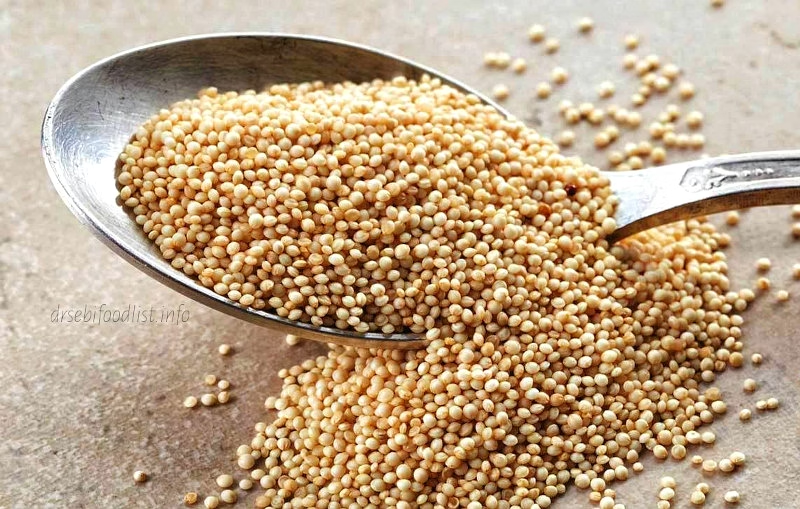
Amaranth is a gluten-free grain that is high in protein and fibre.
It is also known as Rajgira, Ramdana, and Chaulai. Amaranth is a nutritious ancient grain that is grown in the Himalayan region of India.
It is used to make flour, flakes, groats, muesli, and oil. It can also be used as a food fortifier in cereal grain mixtures.
Amaranth is a good source of protein and is sometimes used as a substitute for animal-based proteins. It is also affordable, easy to cook, and has a long shelf life.
Amaranth contains antioxidants like gallic acid, p-hydroxybenzoic acid, and vanillic acid, which may help protect against heart disease and cancer. It also contains fibre and phytonutrients, which can help lower bad cholesterol and balance blood pressure.
Amaranth seeds, oil, and leaves are likely safe when used in food amounts. Taking amaranth as a medicine is possibly safe when used for 3 weeks or less.
Amaranth is a gluten-free grain that is high in protein and fibre.
It is also known as Rajgira, Ramdana, and Chaulai. Amaranth is a nutritious ancient grain that is grown in the Himalayan region of India.
It is used to make flour, flakes, groats, muesli, and oil. It can also be used as a food fortifier in cereal grain mixtures.
Amaranth is a good source of protein and is sometimes used as a substitute for animal-based proteins. It is also affordable, easy to cook, and has a long shelf life.
Amaranth contains antioxidants like gallic acid, p-hydroxybenzoic acid, and vanillic acid, which may help protect against heart disease and cancer. It also contains fibre and phytonutrients, which can help lower bad cholesterol and balance blood pressure.
Amaranth seeds, oil, and leaves are likely safe when used in food amounts. Taking amaranth as a medicine is possibly safe when used for 3 weeks or less.