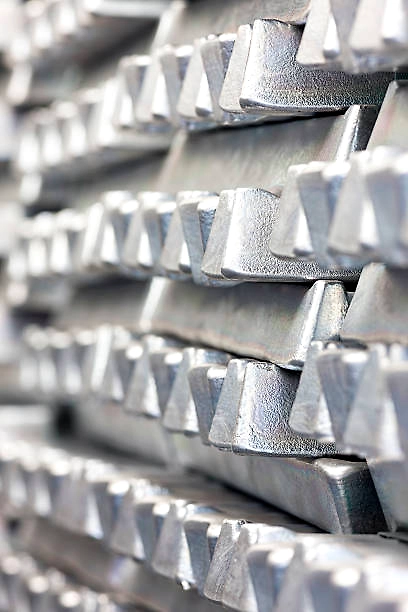
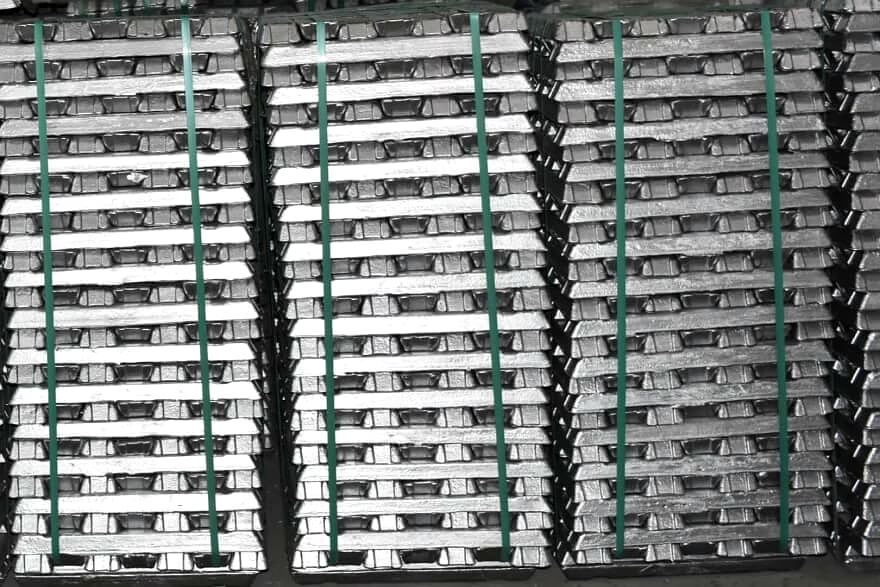
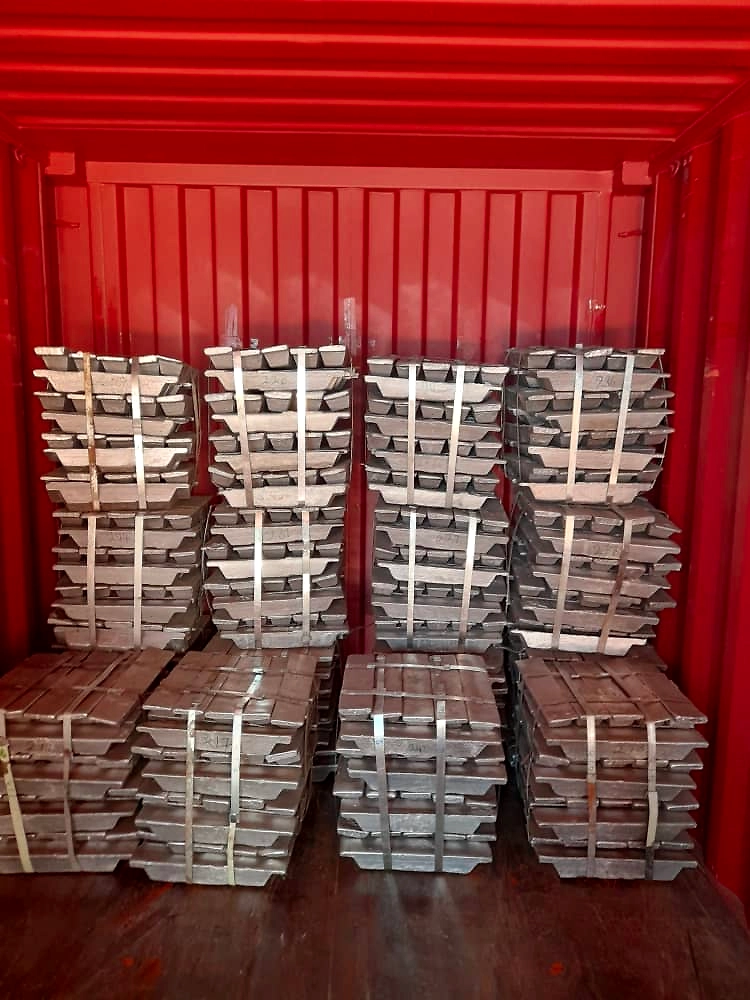
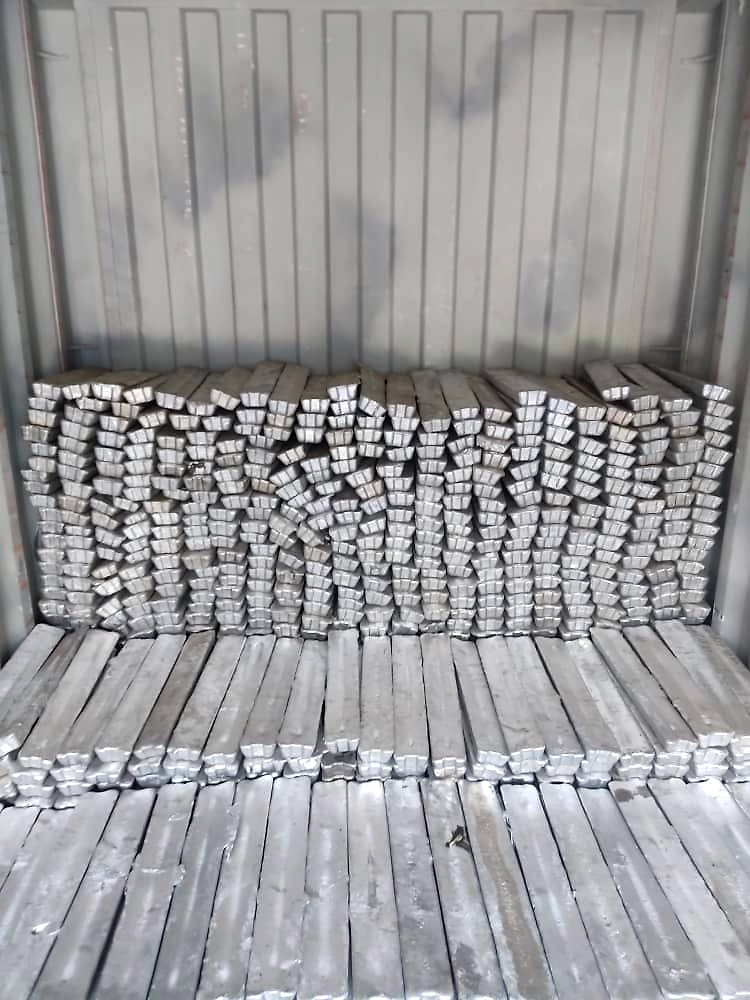
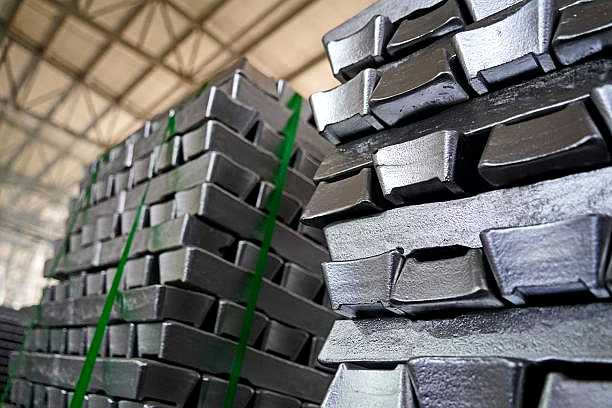
Indian Stalwart Global Sourcing offers high-quality Aluminum Ingots ideal for industrial use including casting, extrusion, and rolling. These ingots are manufactured from both primary raw materials (bauxite) and recycled aluminum scrap, ensuring versatility and environmental sustainability. Available in several forms such as rectangular, T-shaped (tri-lock), and round billets, the Aluminum Ingots come in weights ranging from a few kilograms up to several hundred kilograms. They are specifically designed for sectors like transportation, construction, and manufacturing, supplying essential raw material for making engine parts, wheels, building profiles, and various fabricated metal products. The ingots are carefully processed through stages like melting, homogenizing, degassing, filtration, casting, cooling, and inspection to ensure controlled chemistry, high purity (up to 99.8% Aluminum), and excellent quality. Different types of aluminum ingots offered include primary (high purity), secondary/remelting (recycled), and alloyed ingots pre-alloyed with elements like silicon, magnesium, or copper to suit specialized casting applications such as ADC12, 356, and 383 grades. Indian Stalwart Global Sourcing ensures factory-direct pricing with a low MOQ of 1 KG, making it convenient for businesses of all scales to procure dependable Aluminum Ingots for their production needs.
Key Features
| Features | Description |
|---|---|
| Purity | Up to 99.8% Aluminum, available in both primary high-purity and secondary recycled forms |
| Forms Available | Rectangular, T-shaped (tri-lock), Round billets |
| Weight Range | From a few kilograms to several hundred kilograms per ingot |
| Alloy Options | Pure aluminum and pre-alloyed grades (ADC12, 356, 383) |
| Applications | Casting, extrusion, rolling for transportation, construction, and industrial sectors |
| Manufacturing Process | Includes melting, homogenizing, degassing, filtration, casting, cooling, and inspection |
| MOQ | 1 KG |
| Customization | Available alloy grades and ingot sizes to meet specific industrial requirements |
| Quality Control | Chemical analysis, hardness checks, and surface inspection |
| Sustainability | Option for recycled aluminum ingots reducing environmental impact |
| Attributes | Description |
|---|---|
| Material | Aluminum (99%+ pure or alloyed) |
| Shapes | Rectangular, T-shaped (tri-lock), Round billets |
| Weight per Ingot | Varies from few KG to several hundred KG |
| Purity (Primary Ingot) | 99.5% to 99.8% Aluminum |
| Alloy Grades | ADC12, 356, 383 and others on request |
| Production Method | Primary production from bauxite and secondary recycling from scrap |
| Surface Finish | Washed and brushed to remove oxides and residues |
| Quality Certifications | Chemical composition and hardness-tested |
| MOQ | 1 KG |
| Packaging | Stamped or labeled with heat/batch number, palletized for shipment |
*Disclaimer: The above description has been AI-generated and has not been audited or verified for accuracy. It is recommended to verify product details independently before making any purchasing decisions.
We offer primary ingots made from refined bauxite with high purity (99.5-99.8%), secondary/remelting ingots produced from recycled scrap aluminum, and foundry/alloy ingots pre-alloyed with elements like silicon, magnesium, or copper for specific casting applications such as ADC12, 356, and 383 grades.
Yes, Indian Stalwart Global Sourcing provides customization options in alloy grades including ADC12, 356, and 383, as well as various standard ingot shapes like rectangular, T-shaped (tri-lock), and round billets to meet your manufacturing requirements.
The minimum order quantity for Aluminum Ingots is 1 kilogram, making it suitable for both small and large scale industrial requirements.
Our Aluminum Ingots undergo thorough quality control, including chemical composition analysis, hardness testing, surface cleaning, and inspection to guarantee purity, mechanical properties, and defect-free products.
Yes, we offer secondary/remelting Aluminum Ingots made from recycled aluminum scrap, which are cost-effective and environmentally sustainable while ensuring acceptable alloy content for industrial use.
Country Of Origin: India
Looking for Aluminum Ingots? Indian Stalwart Global Sourcing Company is the best place for your procurement Requirements.
Aluminum ingots are blocks of solid aluminum (usually 99%+ pure or in alloy form) that are cast from molten metal and used as raw material for further processing, such as casting, extrusion, or rolling.
Aluminum ingots are essentially “starter” forms of aluminum that foundries and mills melt down to make products like sheets, extrusions, cast parts, and other components. They come in standard shapes like rectangles, T‑shaped (“tri‑lock”), or round billets, and typical weights range from a few kilograms up to several hundred kilograms per piece.
Aluminum ingots supply the transportation, construction, and industrial sectors, where they are remelted to make cast‑engine parts, wheels, building profiles, and fabricated products. They are also widely used in smaller foundries and metal‑casting shops that need controlled chemistry and convenient handling sizes.
Aluminum ingots supply the transportation, construction, and industrial sectors, where they are remelted to make cast‑engine parts, wheels, building profiles, and many other fabricated products. They are also widely used in smaller foundries and metal‑casting shops that need controlled chemistry and convenient handling sizes.
Types of aluminum ingots :
Primary ingots: Made from mined bauxite that is refined into alumina and then smelted; these are high‑purity (often 99.5–99.8% Al) and used where trace‑element control is important.
Secondary/remelting ingots: Produced by recycling scrap aluminum; usually cheaper but may have slightly more variable alloy content.
Foundry/Alloy ingots: Pre‑alloyed with elements such as silicon, magnesium, or copper for specific casting applications (for example, ADC12, 356, 383 grades).
Aluminum ingots are manufactured in a clear, step‑by‑step process that starts either from bauxite ore (primary production) or from scrap aluminum (recycling). Below is a simplified “how‑it‑is‑done” sequence, combining both routes.
1. Source the raw material
Primary route: Bauxite ore is mined and refined into alumina (aluminum oxide) via the Bayer process.
Secondary/recycled route: Clean aluminum scrap (old castings, sheets, extrusions, etc.) is sorted by alloy and grade before melting.
2. Melt the aluminum
The raw material (alumina in smelters or scrap in foundries) goes into a furnace (typically electric or gas‑fired) and is heated above about 660 °C until it becomes molten aluminum. Temperature and atmosphere are controlled to avoid oxidation and excessive dross formation.
3. Hold and homogenize the melt
Liquid aluminum is transferred to a holding furnace where it stays at a controlled temperature to ensure uniform composition and to allow any major slag or dross to float to the surface. Chemical analysis is often done at this stage to check alloy content.
4. Purify and degas the melt
Degassing: Rotary‑impeller or bubbling systems inject an inert gas (like argon or nitrogen), sometimes with a small flux, to remove dissolved hydrogen and reduce porosity.
Filtration: The melt may pass through ceramic‑foam filters or other media to remove solid inclusions and non‑metallic particles.
5. Pour into molds
Molten aluminum is poured (manually or by automated teeming ladles) into water‑ or air‑cooled steel or graphite molds shaped to the desired ingot form (rectangular, T‑shaped, etc.). For continuous or semi‑continuous lines, direct‑chill casting uses a water‑cooled mold and a continuous downward draw of the solidifying shell.
6. Cool and solidify
The metal in the mold rapidly loses heat, forming a solidified shell and then a fully solid ingot. Cooling‑water flow, mold design, and casting speed are tuned to minimize internal stresses, cracks, and segregation.
7. Strip and cut the ingots
Once solid, the cast blocks are removed from the molds and often cut to standard length using saws or shears. For direct‑chill or continuous casting, the semi‑solid bar is pulled out and automatically cut into discrete ingots.
8. Clean and inspect
Ingots are washed or brushed to remove surface oxides, mold residues, and superficial defects. They are then inspected for dimensions, surface quality, and sometimes subjected to hardness or chemical‑analysis checks.
9. Marking, stacking, and shipping
Each ingot is typically stamped or labeled with alloy grade, heat number, and batch information, then stacked and palletized for storage or shipment to extruders, rolling mills, or foundries.
Inclusive of all taxes
You Save: 0
Chennai , India
Service Provider , Service Center, Manufacturer, Professional Services, Contractor, Retailer, Brand Owner, Distributor, Exporter, Importer, Wholesaler, Startup
GST- 33bbjpt6176p1zr