
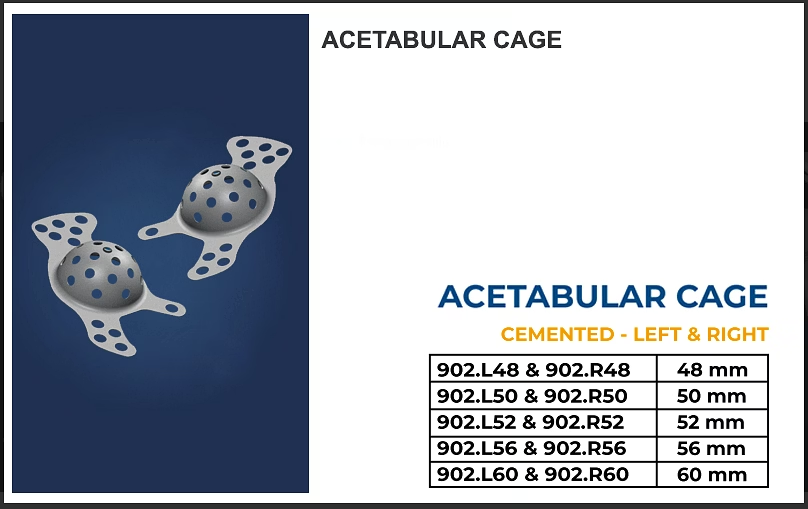
The ACETABULAR CAGE is a precision-engineered orthopedic implant specifically designed for complex hip reconstruction surgeries where there is significant bone loss or damage in the acetabulum, the hip socket. It plays a crucial role in revision hip replacements, trauma cases, post-infection reconstruction, and degenerative conditions impacting the acetabular bone stock. Crafted from biocompatible titanium or cobalt-chromium alloys, this cage provides robust structural support while allowing for the incorporation of bone grafts to promote biological fixation and long-term stability. Its dome-shaped design ensures a secure fit within the compromised hip socket, distributing load evenly across the pelvis, thereby preventing joint dislocation and enhancing overall hip joint functionality. Ideal for orthopedic surgeons addressing severe bone defects, this implant facilitates improved patient outcomes by restoring mobility and stability in challenging surgical scenarios.
Key Features
| Features | Description |
|---|---|
| Purpose | Provides structural support and stabilization to the acetabulum in cases of severe bone loss |
| Primary Use | Revision hip replacement surgeries and complex hip reconstructions |
| Material | High-grade titanium or cobalt-chromium alloy ensuring strength and biocompatibility |
| Design | Dome or circular shape enabling secure fit and compatibility with bone graft placement |
| Load Distribution | Distributes mechanical load across the pelvis to prevent joint dislocation |
| Bone Integration | Allows placement of bone grafts promoting biological fixation and healing |
| Indications | Used in hip joint arthritis, trauma reconstruction, infection-related bone loss, and failed primary hip replacements |
| Benefit | Enhances hip joint stability and supports long-term functional recovery |
| Compatibility | Can be used in conjunction with modular implants for tailored surgical solutions |
| Attributes | Description |
|---|---|
| Material Composition | Titanium or Cobalt-Chromium Alloy |
| Shape | Dome-shaped/Circular |
| Application Area | Acetabulum (Hip Socket) |
| Indication | Revision Hip Replacement, Severe Bone Defects, Trauma, Infection, Arthritis |
| Surgical Use | Orthopedic Hip Reconstruction Surgeries |
| Compatibility with Grafts | Supports use with bone grafts for enhanced fixation |
| Load Distribution | Yes, designed to evenly distribute load across the pelvis |
| Biocompatibility | High, made from FDA and ISO compliant implant-grade materials |
| Sterilization | Steam Sterilizable or Gamma Radiation Compatible |
| Packaging | Sterile, Single-use Packaging |
*Disclaimer: The above description has been AI-generated and has not been audited or verified for accuracy. It is recommended to verify product details independently before making any purchasing decisions.
The acetabular cage is constructed from high-grade titanium or cobalt-chromium alloy, known for their strength, durability, and biocompatibility.
The acetabular cage is primarily intended for revision hip replacements and complex cases with significant acetabular bone loss rather than standard primary hip replacements.
Yes, the design of the cage allows placement of bone graft material to promote biological fixation and enhance long-term implant stability.
Yes, the acetabular cage comes in sterile, single-use packaging compatible with steam sterilization or gamma radiation to ensure surgical readiness.
It is indicated for use in cases of hip joint arthritis, acetabular bone loss due to trauma, infection, and failed previous hip replacement surgeries.
An acetabular cage is a specialized orthopedic implant used in complex hip reconstruction surgeries, especially when there is significant bone loss or damage in the acetabulum (hip socket). It provides structural support and stability during hip replacement, particularly in revision surgeries where standard implants may not suffice.
Key Points:
Purpose: Stabilizes the hip joint when the acetabulum has insufficient bone stock.
Usage: Common in revision hip replacements, bone loss due to trauma, infection, or degeneration.
Design: Allows placement of bone grafts to promote healing and long-term fixation.
Benefits: Distributes load across the pelvis, prevents joint dislocation, and supports biological fixation.
Acetabular cages are essential in addressing severe bone defects, ensuring stability, and improving patient outcomes in complex hip surgeries.
Definition:
An acetabular cage is an orthopedic implant designed to provide stability to the acetabulum (hip socket) in the hip joint. It is typically used in patients undergoing hip replacement surgery or those with significant damage to the acetabulum.
Purpose:
Stabilization: The cage enhances the stability of the hip joint, which is crucial for proper movement and function.
Bone Support: It supports damaged or weakened bone structures, improving the patient's overall mobility.
Design:
Material: Acetabular cages are usually made from titanium or cobalt-chromium alloys, known for their strength and biocompatibility.
Shape: The cages are typically circular or dome-shaped, allowing for a secure fit within the acetabulum.
Indications:
Hip joint arthritis
Reconstruction following trauma or fractures
Revision surgery after a failed hip replacement
Advantages:
Increased Stability: It enhances the stability and function of the joint.
Bone Growth Promotion: The implant encourages bone growth, which is essential for long-term success.
Conclusion:
The acetabular cage is a vital device that helps restore the functionality and stability of the hip joint, particularly in patients with significant bone loss or damage.

