Our Products
Showing 1-2 of 2 products
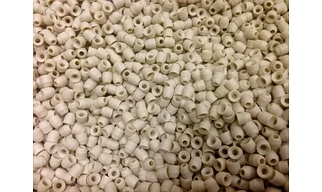
Ceramic Interlocking Beads
Ceramic interlocking beads have been used as a practical method of insulating wires with them interlocking together to provide safe and continuous electrical insulation. Ceramic interlocking beads (fish spine beads) are short cylindrical tubes with one concave and one convex end and provide continuous shielding of a central conductor.
These Ceramic interlocking beads is manufacture by using steatite material which have excellent heat resistance and temperature resistance and are used in electrical temperatures where PTFE and Fiberglass wires would not be suitable.
We are a reliable name for providing ceramic interlocking beads to many customers.
Ceramic Interlocking Beads Main Features
1. High resistivity
2. Moderate strength
3. Excellent electrical properties
4. Low coefficient of thermal expansion
5. Good mechanical stability

Ceramic Tube
Ceramic tubes used in furnaces are high-temperature-resistant components designed to provide thermal insulation, mechanical support, and protection for internal components such as thermocouples, heating elements, or gases. These tubes are typically made from advanced ceramic materials such as alumina, mullite, or zirconia, depending on the specific application and temperature requirements.
Key Features:
- High Temperature Resistance: Can withstand temperatures ranging from 1000°C to over 1800°C depending on the ceramic material.
- Thermal Stability: Maintains structural integrity and does not deform under prolonged high-heat exposure.
- Chemical Resistance: Inert to most corrosive gases and molten metals, ensuring long service life.
- Electrical Insulation: Ideal for insulating electrical elements or thermocouples in high-temperature environments.
- Low Thermal Conductivity: Helps maintain temperature uniformity inside the furnace chamber.
Common Applications:
- Protective sheaths for thermocouples.
- Tubes for gas delivery or vacuum lines in controlled-atmosphere furnaces.
- Housing for resistive heating elements.
- Structural components in kilns, laboratory furnaces, and industrial heat-treatment equipment.