 FIEO Registered
Our Products
Showing 1-24 of 53 products
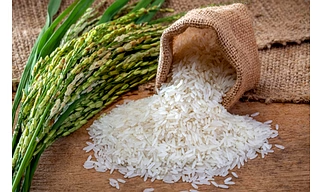
Non Basmati Rice
Rice other than basmati rice is called non– basmati rice. … In fact, basmati rice equals to only 1% production of the total rice grown in India. Non– basmati rice comes in all kinds of different shapes and sizes. Some are long and slender, some are short and thick, some are like beads, and some may be round.
Basmati Rice
Basmati (pronounced IPA: [baːsmət̪i]) is a variety of long, slender-grained aromatic rice which is traditionally grown in India.
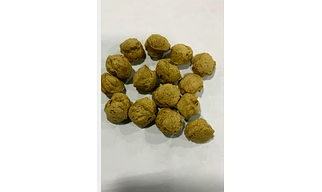
Soybean Chunks
Soyawadi is made with soyabean flour.Soyawadi Rich in Protein and Low in Fat. An excellent Vegan source of protein. It is an excellent source of iron and calcium.
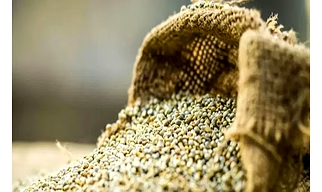
Pearl Millet (Bajra)
Bajra refers to the edible seeds of pearl millet plants. They grow in various shades of white, yellow, gray, brown, and bluish-purple. The seeds are typically cooked as a cereal grain or sometimes finely ground and used as a flour.
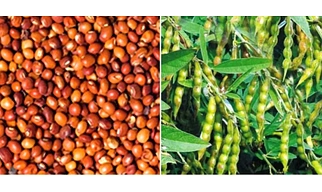
Pigeon Pea Red (Arhar Whole/
Red gram (pigeon pea) is less suitable for the tropics. The most favorable temperature range is 18-30ºC. The crop is grown at a wide range of elevation. Red gram can be grown in almost all soil types that are not very poor in lime and are not subjected to waterlogging.
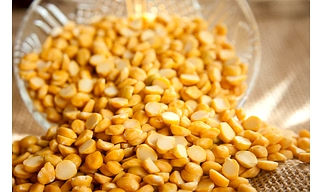
Chana Dal (Split Brown Gram)
Dal is a term originating in the Indian subcontinent for dried, split pulses that do not require soaking before cooking. India is the largest producer of pulses in the world. The term is also used for various soups prepared from these pulses.
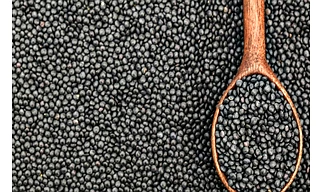
Black Gram Whole (Urad Whole)
Black gram originated in South Asia, where it has been in cultivation from ancient times and is one of the most highly prized pulses of India. It is very widely used in Indian cuisine. In India the Black gram is one of the important pulses grown in both Kharif and Rabi seasons.
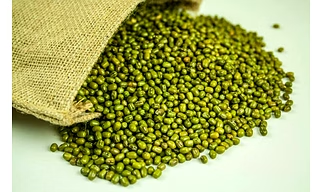
Green Gram Whole (Moong Whole)
The mung bean, alternatively known as the green gram, maash, moong, monggo, or munggo is a plant species in the legume family. The mung bean is mainly cultivated in East Asia, Southeast Asia and the Indian subcontinent. It is used as an ingredient in both savoury and sweet dishes.
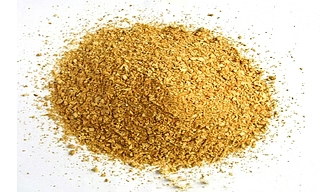
Organic and Non Organic Soybean Meal
Soybean meal is the by-product of the extraction of soybean oil. Several processes exist, resulting in different products. Soybean meal is usually classified for marketing by its crude protein content. High-protein types are obtained from dehulled seeds and contain 47-49% protein and 3% crude fibre (as fed basis).
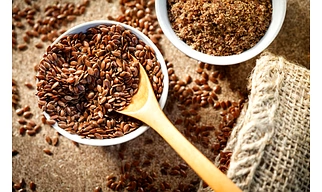
Flax Seeds
For centuries, flax seeds have been prized for their health-protective properties.
In fact, Charles the Great ordered his subjects to eat flax seeds for their health. So it’s no wonder they acquired the name Linum usitatissimum, meaning “the most useful.”
Nowadays, flax seeds are emerging as a “super food” as more scientific research points to their health benefits.
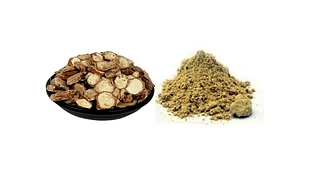
Kapoor Kachli
Kapoor Kachli or Kapur Kachri powder also known as Hedichium spicatium in scientific terms is pure and natural and is made from roots used in Ayurvedic medicine to soothe. It has fortifying virtues as it is a source of antioxidants. It works amazingly when it comes to making the hair shinier and thicker.
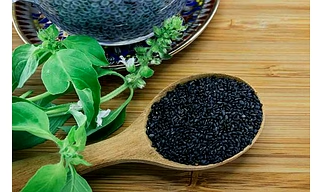
Basil/Tulsi Seeds
They look similar to sesame seeds but are black. The type that you eat typically comes from sweet basil, Ocimum basilicum, which is the plant commonly used to season foods. For this reason, the seeds are typically referred to as sweet basil seeds. They also go by many other names, including sabja and tukmaria seeds.
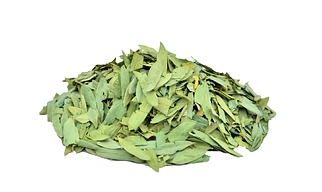
Senna Leaves
Senna is an FDA-approved over-the-counter (OTC) laxative. A prescription is not required to purchase senna. It is used to treat constipation and also to clear the bowel before diagnostic tests such as colonoscopy.
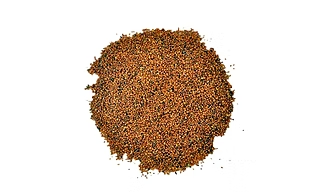
Taramira (Eruca Sativa)
Taramira (Eroea sativa Mill) is a low growing, annual oilseed crop with dull green, deeply cut. compound leaves. The leaves are characterized by a distinctive spicy, pungent flavour resembling horseradish.
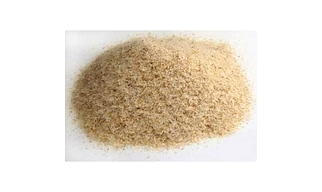
Psyllium Husk Powder
Psyllium Husk is a soluble fiber derived from the seeds of Plantago ovata, an herb grown mainly in India. Psyllium husk powder is the main active ingredient in Metamucil, a fiber supplement that reduces constipation.
Because of its excellent water solubility, psyllium can absorb water and become a thick, viscous compound that resists digestion in the small intestine.
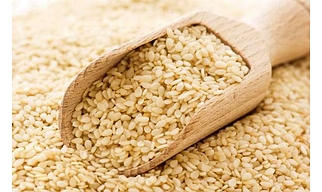
Hulled Sesame
Sesame seeds are tiny, oil-rich seeds that grow in pods on the Sesamum indicum plant. Unhulled seeds have the outer, edible husk intact, while hulled seeds come without the husk. The hull gives the seeds a golden-brown hue. Hulled seeds have an off-white color but turn brown when roasted.
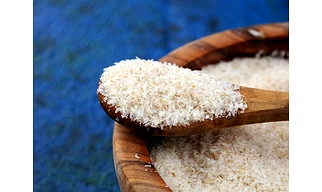
Psyllium Husk
Psyllium Husk is a soluble fiber derived from the seeds of Plantago ovata, an herb grown mainly in India. Psyllium husk is the main active ingredient in Metamucil, a fiber supplement that reduces constipation.
Because of its excellent water solubility, psyllium can absorb water and become a thick, viscous compound that resists digestion in the small intestine.
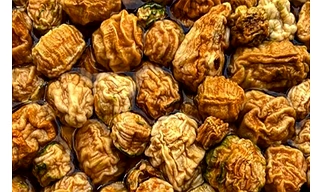
Gol Kachari (Zedoari)
Curcuma zedoaria (zedoary, white turmeric, or temu putih) is a perennial herb and member of the genus Curcuma, family Zingiberaceae.
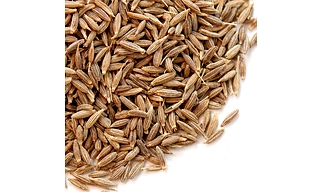
Cumin Seeds
Cumin is a spice that comes from the Cuminum cyminum plant. It is native to Asia, Africa, and Europe. However, people all around the world use it to flavor meals. People usually buy cumin in the form of whole dried seeds or as ground powder. It is a typical ingredient in many spice blends, such as curry powder.
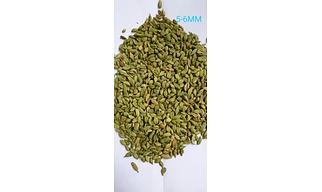
Green Cardamom
Green cardamom is a aromatic spice with a very wide range of uses. The plant has underground stems with leafy roots, large white or pale green leaves, pale green fruits and black seeds. The spice has a very warm aroma and pungent taste which it can retain for a very long time.
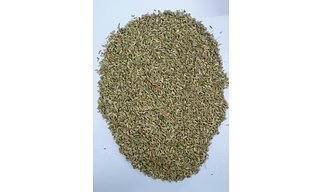
Fennel Seeds
Fennel seeds have a recognizable long, thing shape and are pale green or brown in color. They give a sweet licorice-like taste and scent to curries, stews, bread, desserts, and beverages. In some parts of the world, people chew plain or sugar-coated fennel seeds after a meal.
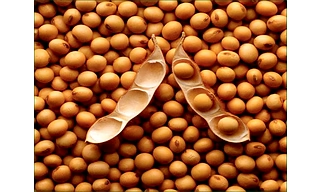
Soybean Seeds
Derived from pod of a soy plant, Soybean Seeds (Food & Feed grade) Non-GMO is widely demanded in the market due to its high levels of protein and mild flavor. The array of the Soybean Seeds includes a huge variety having no alternative in the market.
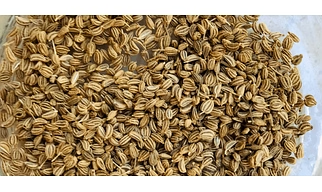
Ajwain Seeds (Bishop's Weeds/Carom Seeds)
Carom seeds are the seeds of the ajwain herb, or Trachyspermum ammi. They’re common in Indian cuisine. Although referred to as “seeds,” carom seeds are the fruit of the ajwain herb. They’re slightly green to brown in color and have a pungent, bitter taste.
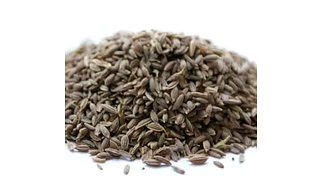
Dill Seeds
Dill seed is an ancient Indian spice. Its seeds, seed oil and whole plant is used in Indian culinary. It is mainly used in digestive disorders. It is also called as Indian Dill.

 GL Trustmark