
 FIEO Registered
Our Products
Showing 1-17 of 17 products
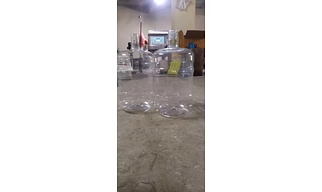
TRANSPARENT PET WATER CAN -20-liter t
ransparent PET Water Can – 20 Liter
Product Overview:
The 20-liter transparent PET water can is a durable and hygienic storage solution designed for safe drinking water. Manufactured using food-grade PET resin, it ensures freshness, purity, and long-lasting quality. Its clear body makes water level visibility easy, making it suitable for both household and commercial use.
Key Features:
Capacity: 20 Liters
Material: 100% Virgin, Food-Grade PET (Polyethylene Terephthalate)
Transparency: Crystal-clear body for easy water level monitoring
Design: Lightweight, strong, and shatter-resistant
Neck Type: Standard wide mouth for easy filling & dispensing
Handle: Ergonomically designed for comfortable grip and handling
Cap: Leak-proof, tamper-evident closure to maintain hygiene
Reusability: Can be reused multiple times with proper cleaning
Safety: BPA-free, non-toxic, and odorless
Applications:
Packaged drinking water supply
Household water storage
Office water dispensers
Outdoor activities & events
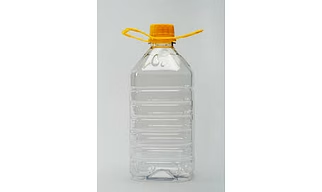
REHI PLASTIC BOTTLE
lastic Bottle Manufacturing – Business Summary
We are engaged in the manufacturing of high-quality plastic bottles designed for packaging liquids across various industries. Our production focuses on durability, safety, and export-grade standards.
🔹 Product Range
Capacity: 5-Liter plastic bottles
Material: Food-grade HDPE / PET
Strong handle design
Leak-proof screw caps with sealing option
Custom colors and branding available
Suitable for water, edible oil, chemicals, detergents, and industrial liquids
🔹 Manufacturing Capabilities
Blow molding production technology
High daily production capacity
Strict quality control procedures
In-house mold development (custom designs available)
Lightweight yet strong bottle structure
🔹 Quality & Compliance
Food-grade raw materials
Leak testing and strength testing
Export-quality packaging
Compliance with international packaging standards
🔹 Packaging & Logistics
Packed in strong export cartons
Suitable for 20ft and 40ft container loading
Pallet or floor loading options
On-time delivery and bulk production capability
🔹 Business Objective
To supply reliable, cost-effective, and durable plastic packaging solutions to domestic and international markets with long-term partnerships.
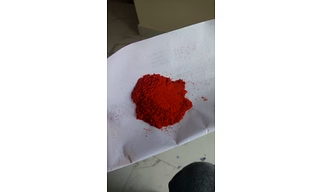
Red chilli powder
Features
- Made from high-quality red chilies
- Intense and spicy flavor profile
- Vibrant red color adds visual appeal to dishes
- Versatile ingredient for various cuisines
- Carefully sourced and packaged to preserve freshness
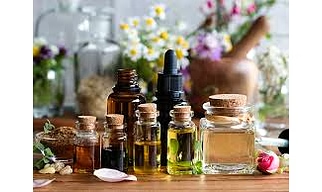
ESSENTIAL OILS PRODUCT
Essential oils are the hydrophobic liquid of odoriferous and volatile aromatic compounds of a plant. Essential oils can be natural (vegetable origin) or synthetic. Only a few essential oils have useful antibacterial properties. The most used are thymol, trans-cinnamaldhyde, carvacrol and eugenol. Essential oils are the hydrophobic liquid of odoriferous and volatile aromatic compounds of a plant. Essential oils can be natural (vegetable origin) or synthetic. Only a few essential oils have useful antibacterial properties. The most used are thymol, trans-cinnamaldhyde, carvacrol and eugenol.

COSMETICS & TOILETRIES PRODUCT
cosmetics, Any of several preparations (excluding soap) applied to the human body for beautifying, preserving, or altering the appearance or for cleansing, colouring, conditioning, or protecting the skin, hair, nails, lips, eyes, or teeth.
cosmetics, Any of several preparations (excluding soap) applied to the human body for beautifying, preserving, or altering the appearance or for cleansing, colouring, conditioning, or protecting the skin, hair, nails, lips, eyes, or teeth.
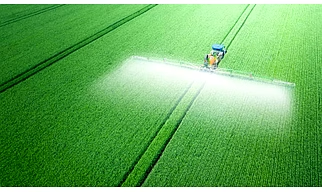
AGRO CHEMICALS PRODUCT
Agrochemicals are chemical formulations that are generally used to control pests, pathogens, and supplying nutrients to the soil. The use of agrochemicals (growth regulators, pesticides, and fertilizers) has increased the yield and growth of crop and thus providing stability to the agricultural production.
Agrochemicals are chemical formulations that are generally used to control pests, pathogens, and supplying nutrients to the soil. The use of agrochemicals (growth regulators, pesticides, and fertilizers) has increased the yield and growth of crop and thus providing stability to the agricultural production.
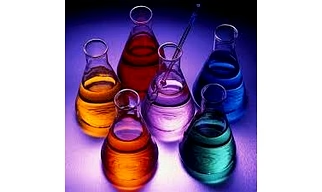
ORGANIC CHEMICALS PRODUCT
Organic chemicals have many uses, including in food and beverages, pharmaceuticals, and more. Some types of organic chemicals include:
Volatile organic compounds (VOCs)
These chemicals have a low boiling point, so they can easily evaporate into the air from their liquid or solid state. Formaldehyde evaporating from paint is an example of a VOC.
Polychlorinated biphenyls (PCBs)
These persistent organic pollutants (POPs) are resistant to chemical, biological, and photolytic degradation, so they can remain in the environment for many years.
Flame retardants
These chemicals can be organohalogens, organophosphates, or both. Organohalogens contain chlorine or bromine bound to carbon, while organophosphates contain phosphorus surrounded by oxygen atoms bound to carbon.
Methylene diphenyl diisocyanate
This chemical is used to make rigid polyurethane in the plastics industry.
Aromatic compounds
These organic molecules have a ring structure known as an aromatic ring, which gives them a distinctive aroma and high stability.
Perfluorinated compounds (PFCs)

INORGANIC CHEMICALS PRODUCT
Acids: These compounds dissolve in water to produce hydrogen ions, or H+ ions. Examples include hydrochloric acid, citric acid, sulfuric acid, and vinegar.
Bases: These compounds produce hydroxyl ions when dissolved in water. Examples include potassium hydroxide, calcium hydroxide, ammonia, and sodium hydroxide.
Salts: These compounds are formed when acids and bases react.
Oxides: These compounds contain oxygen and one or more other elements.
Carbonates: These compounds contain the carbonate ion (CO3^2-) combined with a metal cation.
Fertilizers: Ammonium sulfate and potassium bicarbonate are examples of inorganic fertilizers.
Glass: Inorganic chemicals are used in the production of glass.
Pigments: Inorganic chemicals are used as chemical additives.
Alkali metals: Inorganic chemicals are used as chemical additives.
Colors: Inorganic chemicals are used as chemical additives.
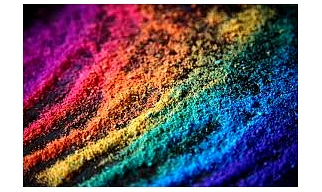
DYE INTERMEDIATES
A dye intermediate is the main raw material used for the manufacturing dyestuff. The manufacturing chain of dyes can be traced back to petroleum based products. Naphtha and natural gas are used for the production of benzene and toluene, which are subsequently used for manufacturing nitro-aromatics.
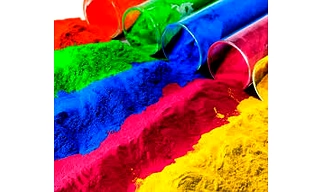
DYES PRODUCT
Dyes are a class of organic compounds that are used to color materials like paper, leather, and textiles. Here are some things to know about dyes:
Composition
Dyes are complex organic compounds with acid-base properties. They are sensitive to low concentrations of metal ions.
History
Ancient dyes came from plants like indigo and madder, or from mollusk shells. Today, most dyes are made from coal tar and petrochemicals.
Application
Dyes are applied to a substrate to which they have affinity. They are usually applied in an aqueous solution.
Fastness
A mordant may be required to improve the fastness of the dye on the fiber.
Uses
Dyes are used in many applications, including food dyes, which are soluble in water and nonaqueous hydrophilic solvents.
Difference from pigments
.
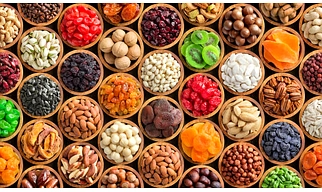
DRY FRUIT PRODUCT
Dried fruits are a nutritious food product that can be used in many ways, including in baking, cooking, and for health benefits:
Nutrition: Dried fruits are full of fiber, antioxidants, and micronutrients. They have a similar amount of nutrients to fresh fruits, but in a smaller package.
Uses: Dried fruits are used in many ways, including in baking, cooking, and for health benefits:
Food manufacturing: Dried fruits are used in sauces, soups, marinades, garnishes, puddings, and food for children and infants.
Health benefits: Dried fruits are important for human health and provide great nourishment.
Taste and texture: Dried fruits add a distinctive taste and texture to the end product.
Types: Some common dried fruits include prunes, dates, apples, and strawberries.
Storage: Dried fruits should be stored in a cool, dry place out of direct sunlight.
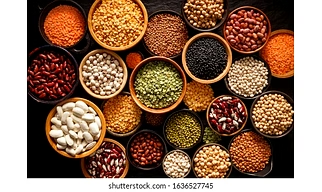
SPICES PRODUCT
Spices are the fragrant or pungent products of such tropical or subtropical species as cardamom, cinnamon, clove, ginger, and pepper; spice seeds include anise, caraway, cumin, fennel, poppy, and sesame. Herbs are the fragrant leaves of such plants as basil, marjoram, mint, rosemary, and thyme.
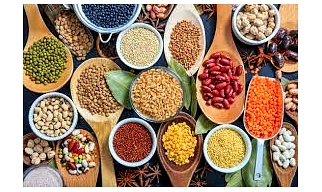
GRAINS AND PULSES PRODUCT
The pulses are broadly classified as containing dried beans, dried peas, chickpeas and lentils. Cereals commonly include maize, rice, wheat and barley. MRLs exist for pesticides used in the growing and storing of pulses and cereals.
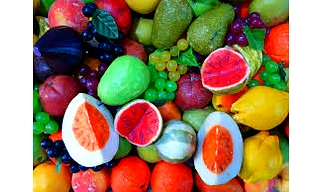
FRUITS PRODUCT
Fruits are a good source of nutrition
Fruits are a great source of fiber, vitamins, and antioxidants. They are also low in calories and naturally sweet.
Fruits are perishable
Fruits are high in moisture and acidity, but they are also perishable because they continue to perform metabolic functions like respiration and transpiration.
Fruit processing challenges
One of the biggest challenges in the fruit processing industry is the limited shelf life of fruit products.
Fruit by-products
Fruit by-products can be used in many industries. For example, avocado peel and seeds are high in phytochemicals that have antioxidant and anti-inflammatory properties.
Selecting fruits
When selecting fruits at the store, avoid damaged or bruised ones. Precut pieces should be refrigerated or surrounded by ice.
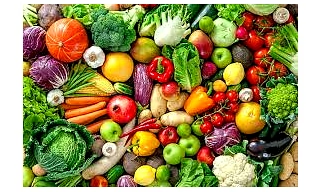
VAGETABLE PRODUCT
Vegetable products are plant products that can contain bioactive phytochemicals, which are compounds with beneficial properties such as antioxidant, anticancer, or antimicrobial effects. Some examples of vegetable products include:
Vegetable products are plant products that can contain bioactive phytochemicals, which are compounds with beneficial properties such as antioxidant, anticancer, or antimicrobial effects. Some examples of vegetable products include:
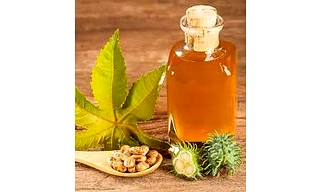
CASTOR OIL PRODUCT
astor oil is a vegetable oil derived from the Ricinus communis plant, which is common in the Eastern areas of the world. Castor oil is not frequently used in modern medicine, but its utility is justified when patients prefer a more natural approach
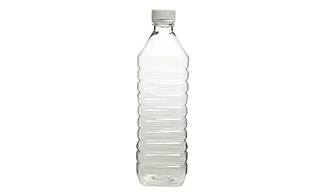
WATER PLASTIC BOTTLES
Product Description:
We offer high-quality plastic bottles made from durable HDPE (High-Density Polyethylene) and PET (Polyethylene Terephthalate) materials. These bottles are ideal for packaging in industries such as pharmaceuticals, cosmetics, food & beverages, agrochemicals, and industrial liquids.





 GL Trustmark