

Our Products
Showing 1-5 of 5 products
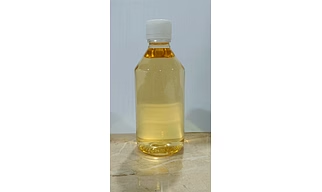
Distilled Soya Fatty Acid
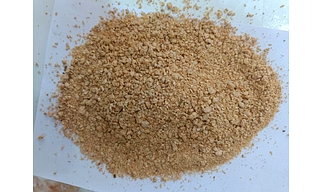
Soyabean Meal DOC
Soybean meal is the most important protein source used to feed farm animals. It represents two-thirds of the total world output of protein feedstuffs, including all other major oil meals and fish meal. Soybean meal is the by-product of the extraction of soybean oil. Several processes exist, resulting in different products. Soybean meal is usually classified for marketing by its crude protein content. High-protein types are obtained from dehulled seeds and contain 47-49% protein and 3% crude fibre (as fed basis).
Soybean meal (SBM) is a protein supplement used in animal and human nutrition, and is the most common protein source for livestock. It's also used in cosmetics, health supplements, and antibiotic development. Here are some details about soybean meal:
Protein content
SBM's protein content varies depending on how it's processed. Solvent-extracted SBM contains 44% protein, while dehulled, solvent-extracted SBM contains 48% protein.
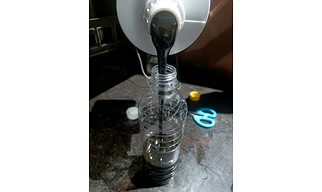
Soya Pitch Oil (Residue)
Black printing inks: Soya pitch oil is used as a base material for black printing inks
Binding agent: Soya pitch oil acts as a binding agent
Heating fuel: Soya pitch oil is used as a heating fuel in several chemicals industries
Soap industries: Soya pitch oil is used in soap industries
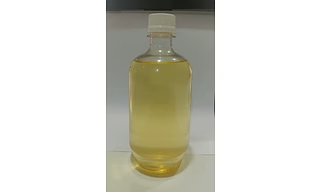
Castor Oil BSS/FSG
Castor oil is a vegetable oil that comes from the seeds of the Ricinus communis plant, also known as the castor bean:
Appearance
Castor oil is a clear or pale yellow liquid with a slight odor and a bland taste.
Composition
Castor oil is rich in monounsaturated fatty acids, triglycerides, phytosterols, tocopherols, and tocotrienols.
Properties
Castor oil is non-volatile, non-drying, and has a good shelf life. It has a boiling point of 313 °C (595 °F) and a density of 0.961 g/cm3.
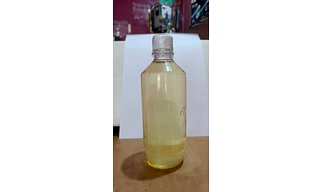
Dehydrated Castor Oil
Dehydrated castor oil (DCO) is a yellow, oily liquid with a distinct odor that's used in a variety of industries:
Drying oil, DCO is a drying oil with similar properties to tung oil. It gives dry paint films a fine gloss, toughness, flexibility, adhesion, and chemical and water resistance.
Applications - DCO is used in paints, varnishes, enamel coatings, corrosion resistant coatings, marine paints, wire enamels, resins, inks, and more. It can also be used as a primary binder for enamels, house paints, sealants, caulks, and inks.
Production
DCO is made by removing about 5% of the chemically combined water from castor oil. The dehydration process turns the ricinoleic acid in castor oil into linoleic acid.


 GL Trustmark