
 FIEO Registered
Our Products
Showing 1-24 of 27 products
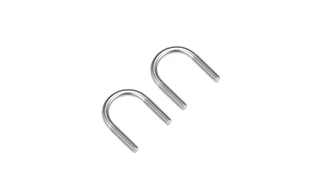
U - BOLTS
A U-bolt is a bolt in the shape of the letter U with screw threads on both ends. U-bolts have primarily been used to support pipework, pipes through which fluids and gasses pass. As such, U-bolts were measured using pipe-work engineering speak. ... U-bolts are also used to hold ropes together.
Bolts are typically used to hold materials or objects together, or to position objects. The chamfer at the opposite end of the head provides a slightly beveled edge which helps with inserting the bolt into holes and nuts.
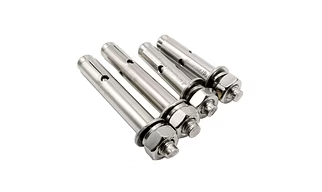
Anchor Bolts
Anchor bolts are crucial components in construction and engineering, used to affix structures or equipment to concrete surfaces securely. These bolts are vital for ensuring stability and load-bearing support, making them indispensable in various applications such as building foundations, machinery installations, and structural reinforcement. Anchor bolts come in different types, including wedge, sleeve, and epoxy bolts, each designed to meet specific needs and conditions. Their proper installation is key to maintaining the integrity and safety of the structures they support, preventing potential failures and enhancing overall durability.
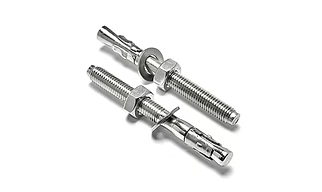
Wedge Anchor Though Bolt
Wedge anchors, commonly referred to as through bolts, are post-installed mechanical anchors specifically designed for solid concrete applications. These anchors offer a dependable and sturdy solution for securing heavy loads, making them essential in various construction and engineering projects. Known for their robust performance, wedge anchors are widely utilized in situations requiring high load-bearing capacity and reliable fastening. Their design ensures a secure grip within the concrete, providing stability and strength to the structures they support, thus playing a critical role in maintaining the integrity and safety of many construction projects.
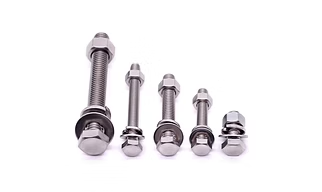
Hex Bolt With Inserted PL&SP Washher
A hex bolt equipped with a plain (PL) washer and a spring (SP) washer forms a specialized fastening assembly aimed at enhancing the reliability and security of bolted joints. This combination is particularly effective in applications subjected to vibration or dynamic loads, as the spring washer helps to maintain tension and prevent loosening over time. The plain washer distributes the load evenly, reducing stress on the material and improving the overall stability of the joint. Together, they ensure the long-term integrity and performance of the bolted connection, making them invaluable in various engineering and construction scenarios.
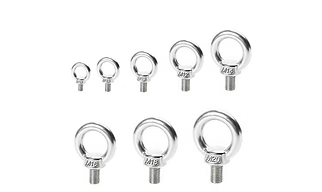
I- Bolts
I-bolts, also known as eye bolts, are fasteners featuring a looped head designed for attaching cables, ropes, or chains to structures. These versatile components are widely used in various applications, including lifting, rigging, and anchoring, due to their ability to securely hold and distribute loads. In lifting operations, I-bolts provide a strong and reliable point of attachment, ensuring safety and stability. In rigging and anchoring contexts, they help maintain the structural integrity of the setup, making them essential in construction, marine, and industrial environments. Their robust design and functionality make I-bolts indispensable for tasks requiring secure and dependable fastening solutions.
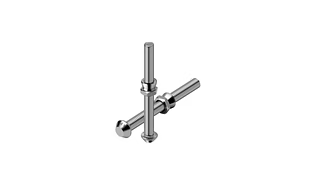
Anti Theift/Security Bolt
Anti-theft or security bolts are specialized fasteners engineered to prevent unauthorized removal, thereby offering heightened security for a wide range of applications. These bolts are particularly valuable in public areas, automotive contexts, and any locations where tampering or theft poses a significant concern. Designed with unique heads that require specific tools for installation and removal, security bolts deter potential thieves and vandals. Their robust and tamper-resistant features make them ideal for securing valuable items, critical infrastructure, and equipment, ensuring safety and peace of mind in vulnerable settings.
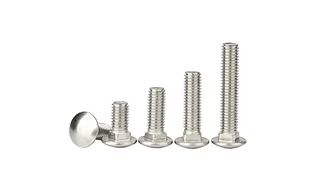
Din 603 Carriage Bolt
DIN 603 outlines the specifications for carriage bolts, also referred to as round head square neck bolts. These bolts are widely utilized in woodworking, metalworking, and construction applications where a smooth, rounded head is desirable for a clean, finished look. The design of the square neck is crucial as it prevents the bolt from turning during installation, ensuring a secure and stable fit. Carriage bolts are particularly valued for their aesthetic appeal and functional reliability, making them a popular choice for projects requiring both durability and an attractive finish.
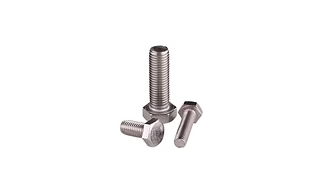
Bsw 1083 Hex Bolt
BSW 1083 pertains to a British Standard specifying the characteristics of hexagon head bolts with British Standard Whitworth (BSW) threads. This thread form, recognized for its distinctive profile, is widely used in the United Kingdom and various other countries. BSW threads are known for their robust and reliable performance in a range of applications, particularly in engineering and construction. Hexagon head bolts conforming to BSW 1083 standards ensure compatibility and consistent quality, making them a preferred choice for projects requiring dependable fastening solutions with standardized threading.
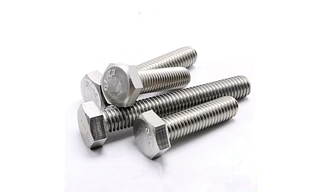
ISO 4017 Hex Bolt
The ISO 4017 Hex Bolt, commonly referred to as a hexagon head bolt, is a standardized fastener characterized by its hexagonal head, which allows for easy tightening and loosening with a wrench or socket tool. These bolts feature a threaded shaft and are typically constructed from steel, though they can also be manufactured from other materials like stainless steel or brass to suit different application needs. The versatile design of ISO 4017 Hex Bolts makes them suitable for a wide range of uses in construction, engineering, and manufacturing, providing reliable and durable fastening solutions across various industries.
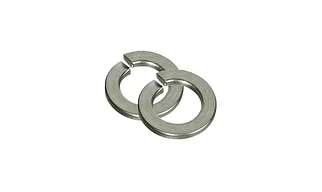
DIN 127 SPRING WASHERS
DIN 127 is a standard that defines the dimensions, materials, and technical delivery conditions for spring washers, also known as split lock washers. These washers are specifically designed to prevent the loosening of fasteners due to vibration and dynamic loads. By providing a reliable locking mechanism, DIN 127 spring washers play a crucial role in maintaining joint integrity in various engineering and construction applications. Their ability to secure fasteners under dynamic conditions makes them indispensable for ensuring the stability and safety of assemblies subjected to frequent movement or load changes.
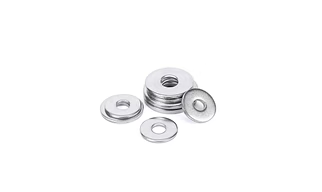
DIN 125 PLAIN WASHER
DIN 125 is a standard that outlines the dimensions, materials, and technical delivery conditions for plain washers used in general engineering applications. These washers are specifically designed to distribute the load of threaded fasteners, such as screws or nuts, thereby reducing wear and deformation. To enhance their performance and durability, washers can be supplied with various surface finishes. Common finishes include plain (oiled), zinc-plated, hot-dip galvanized, or black oxide, each offering different levels of corrosion resistance and aesthetic appeal. DIN 125 washers are essential components in ensuring the longevity and reliability of bolted joints in a wide range of engineering and construction projects.
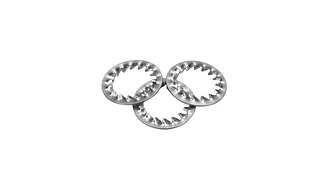
DIN 6978- A STAR WASHER
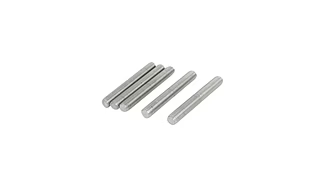
Din 976 Threded Rod(Studs)
DIN 976 outlines the specifications for the dimensions, tolerances, and mechanical properties of threaded rods, also known as studs. These rods are utilized in a wide range of applications, including fastening, bracing, and structural support. The standard ensures that threaded rods meet precise criteria for performance and compatibility, which is crucial for achieving reliable and effective results in various settings. Adhering to DIN 976 specifications allows for the proper selection and use of these threaded rods, ensuring their suitability for maintaining structural integrity and providing dependable support in diverse engineering and construction applications.
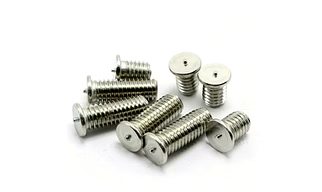
Weld Studs
Weld studs are fasteners that are permanently attached to a base material through welding, providing a robust and durable attachment point. These studs are frequently employed in various industries, including construction, manufacturing, and automotive applications, due to their reliability and strength. Designed for welding small-diameter studs onto thin materials, the process involves a high-energy discharge that quickly and efficiently welds the stud with minimal heat. This method ensures a secure bond and maintains the integrity of the base material, making weld studs an essential component in many industrial fastening applications.
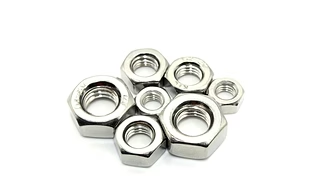
Din 934 Hex Nut
The DIN 934 Hex Nut is a standardized fastener with a hexagonal shape, designed in accordance with the DIN (Deutsches Institut für Normung) standards, specifically DIN 934. This standard specifies the dimensions, materials, mechanical properties, and tolerances for hex nuts, ensuring their suitability for a wide range of industrial and construction applications. By adhering to these precise specifications, DIN 934 Hex Nuts provide reliable performance, compatibility, and durability, making them a crucial component in securing various assemblies and structures across different industries.
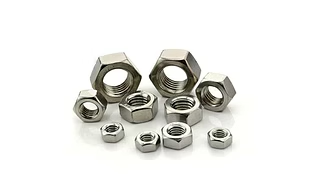
Bsw 1083 Hex Nut
The BSW 1083 Hex Nut is a versatile and dependable fastener that conforms to the British Standard Whitworth (BSW) thread system, recognized for its 55° thread angle and rounded thread profile. This hex nut is available in a variety of materials and finishes, making it suitable for a broad spectrum of applications. Whether used in construction, machinery, automotive, or general engineering sectors, the BSW 1083 Hex Nut ensures strong, durable connections, providing reliable performance in demanding environments. Its adherence to BSW standards ensures compatibility and consistent quality across different projects.
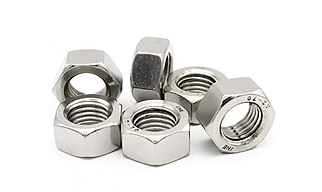
Uni Hex Thick Nut 5587
A hex thick nut, commonly referred to as a heavy hex nut, is designed to be thicker and typically stronger than a standard hex nut. This increased thickness provides enhanced strength and resistance to stress, making it ideal for heavy-duty applications where robust performance is critical. The designation “5587” usually indicates a specific size or identification number within the UNI standard, ensuring consistency in dimensions and tolerances. By adhering to these standards, heavy hex nuts deliver reliable, high-strength connections in demanding engineering and construction environments.
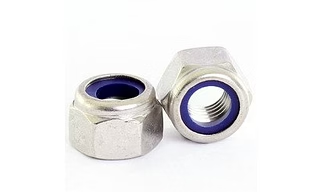
Din 982 Nylook Nut
A Nylock nut is a specialized type of lock nut featuring a nylon collar insert that effectively resists loosening. The nylon insert, positioned at the top of the nut, is slightly smaller than the major diameter of the screw, creating a tight grip when the nut is tightened. As the nut is fastened, the nylon insert deforms elastically, securely gripping the bolt threads. This design provides significant resistance to loosening caused by vibration and torque, making Nylock nuts ideal for applications where maintaining a secure connection is critical, especially in dynamic or high-vibration environments.
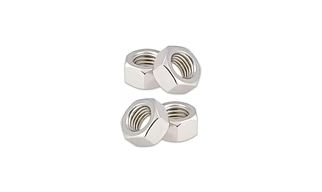
ISO 4032 Hex Nut
ISO 4032 is an international standard that defines the specifications for regular hex nuts with coarse threads. These nuts are commonly employed in a wide range of general-purpose fastening applications. Designed with six sides, a hex nut is intended for use with bolts or similarly threaded fasteners. The hexagonal shape of the nut allows for easy wrenching from various angles, ensuring efficient torque transfer. This design makes ISO 4032 hex nuts reliable and versatile components, suitable for securing connections in diverse engineering, construction, and manufacturing projects.
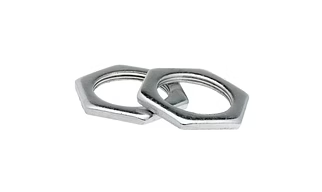
Din 439 Lock Nut / Thin Nut
The DIN 439 standard defines the dimensions and characteristics of hexagon thin nuts, commonly known as lock nuts. These nuts are designed to be thinner than standard hex nuts, making them ideal for applications where space is limited or when used as jam nuts to prevent loosening. The compact design of DIN 439 hexagon thin nuts provides an efficient fastening solution, particularly in situations where a lower profile nut is necessary. By adhering to the specifications outlined in DIN 439, these nuts ensure reliable performance and secure connections in various engineering and mechanical applications.
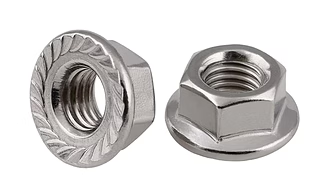
Din 6923 Flange Nut
The DIN 6923 Flange Nut is a specialized hexagonal nut that features an integrated flange at one end, serving as a built-in washer. This design helps to evenly distribute the load across a broader surface area, reducing the risk of damage to the fastening surface and enhancing the stability of the connection. DIN 6923 is a German standard that defines the dimensions and requirements for these hexagon nuts with an integrated flange. These nuts are specifically engineered to provide secure fastening with improved load distribution, making them ideal for applications requiring strong, reliable connections without the need for a separate washer.
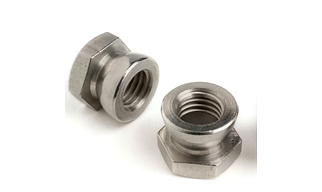
Anti-Theft Nut / Brake Nut
Anti-theft nuts, also known as security or brake nuts, are specialized fasteners engineered to prevent unauthorized removal and tampering. These nuts are designed with unique features that require special tools for installation and removal, making them highly tamper-resistant. Due to their secure design, anti-theft nuts are commonly used in applications where security is of utmost importance, such as in public infrastructure, automotive parts, and high-value equipment. By ensuring that only authorized personnel can access or remove these fasteners, anti-theft nuts play a crucial role in protecting critical components and assets from theft, vandalism, and tampering.
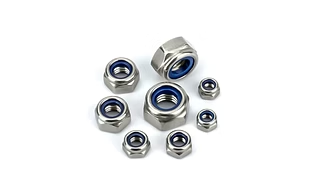
Din 985 Nylock Nut
The DIN 985 Nylock Nut, also known as a nylon-insert lock nut, is a specialized hexagonal nut designed to prevent loosening. It features a nylon collar insert located at the end of the nut. This nylon insert is intentionally smaller in diameter than the nut itself, which causes it to deform elastically when the nut is tightened onto a bolt. This deformation creates a tight grip on the bolt threads, offering effective resistance to loosening, particularly in high-vibration environments. The DIN 985 Nylock Nut is ideal for applications where maintaining a secure connection is critical despite dynamic forces.
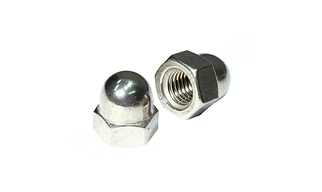
Din 1587 Dome Nut
The DIN 1587 standard outlines the dimensions and specifications for dome nuts, which are distinguished by their rounded, domed shape. This design offers both a decorative finish and functional benefits, such as preventing snagging on exposed threads. A dome nut is essentially a hexagonal nut with a smooth, rounded top that enhances its appearance while providing additional protection to the threads. The domed shape helps shield the threads from damage and minimizes the risk of snagging on clothing or other objects, making it a practical choice for various applications where aesthetics and safety are important.


 GL Trustmark