Our Products
Showing 1-6 of 6 products
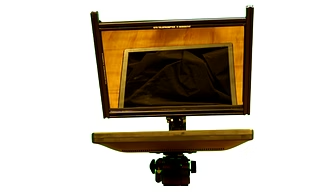
Teleprompter 19
Features include:
Save and load standard RTF formatted files (Word, Notepad, Power presentation, PDF etc.)
Copy and paste from web pages or other MS word, Notepad
All Unicode fonts support
Support for remote controls (multimedia and others)
Adjustable font sizes
Adjustable scroll speed
Fast forward, fast reverse
Colored fonts
Black on white or white on black text
Support for multi-monitor
Support Flipping and mirroring output text
Eye line marks to indicate reading position
Time remaining estimate
Monitor sizes 19 inches
Delivery Time : 0- working Days
Including
> Monitor 19 Inch (HDMI & VGA)
> Beam Splitter Glass 60/40 19Inch (set)
> Teleprompter Software with Dongle
> Teleprompter scrolling Controller ( Bluetooth Remote)
> Camera Mount Base Plate
> Lens Hood Cloth
> HDMI Cable 10 Meters
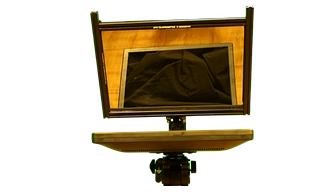
GTS Teleprompter 19
GTS Teleprompter bundle is more than just a monitor – it's a complete solution designed to streamline your workflow and enhance your productivity. With the included software license, you gain access to powerful teleprompter software that simplifies script management, allowing you to easily import, edit, and display your content with precision. Say goodbye to the hassle of manually scrolling through scripts or fumbling with cue cards – with the GTS Teleprompter software, you can focus on delivering your message with confidence and clarity.
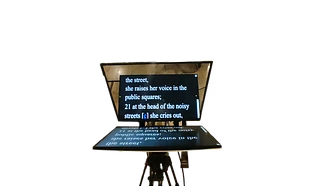
GTS Teleprompter 24
The GTS Teleprompter-24 " 70/30 beam splitter glass, and 30 Feet reading range. The teleprompter supports All camcorders, DSLR, And ENG Cameras. The teleprompter comes with an aluminum extrusion frame which enables mounting the camera on the prompter without requiring counterweights. The 70/30 glass does not have to be removed when folding the hood for transport or storage. You can mount the camera on the prompter and mount that set up on your tripod in a traditional manner or, with an optional free-standing kit, you can mount your camera on your tripod and separately mount the prompter on a stand in front of your camera. An included adjustable camera riser enables 3" of vertical adjustment of your camera.
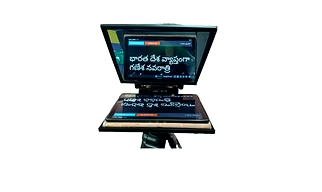
GTS Teleprompter 12
introducing the HD quality GTS teleprompter 12, a professional-grade teleprompting solution with high-definition capabilities. With this powerful tool, you can enhance your presentations and speeches with smooth and accurate prompts, increasing your efficiency and confidence. Featuring cutting-edge technology and easy-to-use controls, the HD Prompter 12 is the ultimate choice for any industry expert. Tab / mobile version, Including android App and remote controller Note. TAB Or Mobile not Including
https://www.youtube.com/shorts/G9gKtNZ7DOU
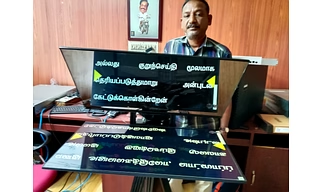
GTS Teleprompter 27 Inches
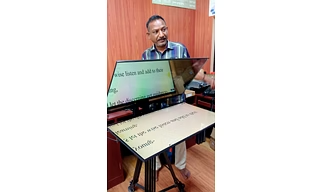
GTS Teleprompter 32 Inches
GTS Teleprompter 32 Inches
The Teleprompter Advantage in Digital Communication
For any modern organization or content creator seeking to elevate its online presence, the teleprompter has transitioned from a niche broadcasting tool to an indispensable asset for digital promotion. At its core, a teleprompter is a transformative technology that resolves the fundamental challenge of creating high-impact video content: how to read a prepared script while simultaneously maintaining authentic, direct eye contact with the viewer. This is a critical element for building trust and establishing a genuine connection. By serving as an invisible guide, the technology enhances professionalism, ensures unwavering message control, and dramatically boosts production efficiency, making it an essential component for any strategy aimed at producing polished, high-quality promotional videos. While historically confined to the domain of broadcast news, the proliferation of affordable, app-based solutions has democratized its power, making it a strategic imperative for solo creators, small businesses, and large corporate teams alike.
Section 1: The Anatomy of a Teleprompter: Beyond a Simple Definition
1.1. Core Principle: How the Beam-Splitter Glass Creates a Seamless Experience
A teleprompter is an elegantly simple system built on a fundamental optical principle. The device typically consists of a display, such as a horizontally mounted tablet or monitor, and a specialized piece of transparent glass known as a "beam-splitter". This glass is strategically positioned at a 45-degree angle in front of the camera lens, acting as a one-way mirror. The script, which is horizontally mirrored on the display, is reflected by the beam-splitter glass toward the speaker, allowing them to read it effortlessly. Simultaneously, the camera can film a clear, unobstructed image directly through the transparent surface of the glass. This ingenious setup creates the powerful illusion that the speaker is speaking spontaneously or has memorized their lines, all while maintaining a consistent and natural eye line with the camera lens.
The true value of this technology extends beyond a simple technical function. It addresses a core psychological challenge inherent in public speaking and on-camera performance: the cognitive burden placed on a presenter. When a speaker is forced to simultaneously remember their script, manage their vocal delivery, and maintain eye contact, the performance often suffers. The brain's resources are finite, and attempting to manage these three tasks at once can lead to a less polished result. The teleprompter elegantly offloads the memorization and recall tasks, allowing the presenter to direct their full attention to more nuanced elements of delivery. This includes focusing on voice modulation, emphasizing key points, and using authentic body language, all of which are essential for forging an emotional connection with the audience. By freeing the speaker's mind, the teleprompter paradoxically provides them with the mental space to be more natural and present.
1.2. A Taxonomy of Modern Teleprompters: From Studio Rigs to Smart Apps
The teleprompter market has evolved considerably, moving from a single, monolithic hardware solution to a diverse ecosystem of tools tailored for specific use cases. Today, several distinct types of teleprompters are available to meet the varied needs of content creators and public speakers.
Camera-Mounted Teleprompters: This is the most prevalent type used for video production. The prompter rig attaches directly to the camera, with the display and beam-splitter glass housed in a single unit around the lens. These are a staple in television studios and are also used by professional videographers.
Presidential/Podium Teleprompters: These are standalone units, often used in pairs, positioned on either side of a lectern for formal speeches and addresses. This dual-screen setup allows a speaker, such as a politician or keynote presenter, to look left and right while delivering their message, creating a wider, more inclusive address to a large audience.
Floor/Stand Teleprompters: Similar to the Presidential models, these are versatile units placed on the floor or a stand and angled upwards. They are commonly used by musicians for reading lyrics during concerts or in theatrical productions.
Mobile/App-Based Teleprompters: This is the newest and most disruptive category. These systems use a smartphone or tablet as the display and often as the camera itself, paired with a small, affordable rig. This technology has become a game-changer for solo creators and small businesses.
The diversification of teleprompter types is a direct response to the fragmentation of the content creation landscape. As video production shifted from expensive, large-scale broadcast studios to individual creators and corporate offices, a demand for more portable, affordable, and multi-functional solutions emerged. The proliferation of mobile devices and free web-based applications is not simply a passing trend; it reflects a fundamental change in the market, where the user's existing device has become the new broadcast studio. This democratization of technology has enabled a new class of professional-grade content to be created without the prohibitive cost and logistical overhead once associated with the industry.
1.3. The Democratization of Technology: Accessibility for Every Creator
Historically, professional teleprompter systems were a costly investment, accessible only to large broadcast networks and production studios. Today, that barrier to entry has been virtually eliminated. The modern market is characterized by a wide array of accessible solutions, ranging from free web apps to low-cost subscription services. Free options like CuePrompter and Teleprompter Mirror offer basic functionality for immediate use, requiring no software download. For users seeking more robust features, there are numerous subscription-based mobile applications and software platforms that provide advanced capabilities.
This market shift represents a significant case study in technological democratization. The cost of entry has been lowered from thousands of dollars for specialized hardware to a monthly subscription fee, effectively empowering any individual with a smartphone to produce high-quality, professional-looking videos. This has a profound ripple effect on modern marketing strategies. Businesses can now create compelling, on-brand video content in-house, on-demand, and with far greater frequency than ever before. This flexibility allows for more authentic and targeted video communication without the logistical and financial overhead of traditional production. The transition from a hardware-first to a software-first business model is a fundamental change that defines the modern video creation industry.
Section 2: The Strategic Value Proposition: Why a Teleprompter is a Must-Have Marketing Tool
2.1. Enhancing Professionalism and Audience Trust
For promotional purposes, a teleprompter's greatest value is its ability to build audience trust through a refined and professional delivery. The technology enables speakers to maintain direct, consistent eye contact with the camera, which is a critical element for forging a human connection and establishing rapport. This uninterrupted gaze creates the impression that the speaker is delivering a heartfelt, spontaneous message directly to the viewer. This is a powerful and persuasive technique that adds a layer of credibility to the brand and the message being communicated.
The perception of professionalism is a function of both the content's quality and the confidence of its delivery. A teleprompter addresses the latter, ensuring a performance that is not only accurate but also psychologically engaging. Without a teleprompter, a speaker may look to the side, down at notes, or to cue cards, which can break the illusion of a personal conversation and signal a lack of preparation or nervousness. These subtle visual cues can erode audience trust. By providing an uninterrupted eye-line, the teleprompter transforms a one-way broadcast into a seemingly direct conversation, which is far more trustworthy and persuasive.
2.2. Boosting On-Camera Confidence and Mitigating Performance Anxiety
The human element is often the most unpredictable variable in video production. The simple presence of a camera can cause even the most knowledgeable subject matter experts to become nervous, forget their lines, or fumble over their words. The teleprompter acts as a psychological safety net, which significantly reduces anxiety and the fear of forgetting key information. By eliminating this core fear, the speaker is liberated to concentrate on the expressive aspects of their performance, such as emotional depth, body language, and voice modulation.
The fear of forgetting lines is a primary cause of on-camera performance issues. This anxiety often leads to rushed speech , a reduction in facial expressions, and a loss of spontaneity. The teleprompter’s role is to manage this anxiety, allowing the speaker to transition from a state of fear to one of confidence. This shift results in a more authentic and engaging performance, which is a significant value-add for any promotional video. The technology essentially serves as a "cognitive pacifier" that allows the presenter to focus on their emotional connection to the material rather than the word-for-word recall, which ultimately produces a better video.
2.3. Achieving Unprecedented Production Efficiency: The ROI in Time and Takes
In the fast-paced world of digital marketing, time is the most valuable currency. A teleprompter's primary return on investment (ROI) is its ability to dramatically compress the video production timeline while simultaneously improving quality. The technology drastically reduces the need for multiple takes, which saves valuable time during both the recording process and in post-production. It also enables the accurate and concise delivery of complex or data-heavy scripts, which are often challenging to remember.
The efficiency gains are a direct result of a cause-and-effect relationship. A speaker attempting to ad-lib or work from sparse notes may ramble, go off-topic, or pause to find their words. This leads to longer, less concise videos that require extensive editing to cut and splice together. A scripted, teleprompted video, by contrast, is inherently more efficient. It ensures that the final video is of optimal duration and that the message stays on-brand and on-topic. This not only prevents production costs from ballooning but also frees up valuable resources for other projects.
2.4. Ensuring Message Control, Consistency, and Accuracy
In an era of heightened brand scrutiny, a teleprompter serves as an essential risk management tool. By guaranteeing the word-for-word delivery of a pre-approved script, the technology ensures a consistent and accurate message every time. This is particularly critical for videos that involve legally contentious or socially sensitive topics, corporate communications, or anything that requires precise phrasing. The teleprompter prevents on-screen talent from going off-script or expressing a misguided message that could harm the brand's reputation.
This benefit is especially crucial for industries such as finance, healthcare, or corporate law, where a single misplaced word or phrase could lead to significant legal or reputational damage. By locking the script in place, the teleprompter provides a layer of control and brand integrity that ad-libbing or working from bullet points simply cannot. It ensures that the message articulated is the one that has been carefully crafted and approved by all stakeholders, thereby aligning corporate communication directly with the overarching brand strategy.
Section 3: A Guide to Modern Teleprompting Solutions: Hardware vs. Software
The choice of a teleprompter system is a strategic one that depends on the specific production needs, budget, and desired workflow. The market is broadly divided into two categories: professional hardware systems and flexible, software-centric solutions.
3.1. Professional Hardware Systems
Professional teleprompter rigs are typically used in traditional broadcast and film production environments. Products like the Glide Gear TMP 100 or units from Prompter People are known for their high build quality, often featuring durable, lightweight materials like aluminum or carbon fiber. These systems are designed to accommodate larger professional cameras and lenses and can provide a reading range of up to 10 feet. Key features to look for in professional hardware include a quality beam-splitter glass that minimizes glare and "ghosting," adjustable mounts for various camera types, and a collapsible design for portability. The cost for these systems can range from a few hundred to several thousand dollars, depending on the screen size and the quality of the materials.
3.2. The Rise of Software-Centric Solutions
The modern market is increasingly dominated by powerful applications and web platforms that leverage existing consumer devices. Free web-based tools like NanoPrompter and CuePrompter offer a basic, no-frills scrolling experience. Meanwhile, premium apps like Teleprompter.com and Teleprompter Premium provide a suite of advanced features, including cloud syncing, speech recognition that automatically scrolls as the speaker talks, and remote control capabilities.
The choice between hardware and software is more than a financial decision; it represents a strategic choice between a traditional, high-investment production model and a flexible, on-demand content creation model. For a small business or solo creator, the marginal benefit of a expensive professional rig is often minimal compared to the value of a flexible, app-based solution. These software-first platforms are appealing because they leverage existing technology—like smartphones and tablets—and a familiar workflow. They offer greater mobility and are better suited for spontaneous content creation, which is a critical capability in modern digital marketing.
3.3. A Strategic Buyer's Checklist: Key Features and Considerations
Selecting the right teleprompter solution requires a careful evaluation of several key factors to ensure the technology matches the intended use case.
Feature Hardware Rigs Software/App Solutions
Cost
Typically ranges from $100 to over $2,000.
Can be free, or a monthly subscription from around $10 to $20.
Portability
Can be bulky and heavy, though some models are designed to be collapsible.
Highly portable, leveraging existing devices like smartphones, tablets, or laptops.
Required Equipment
A dedicated rig with a beam-splitter and a separate camera and display device.
A smartphone, tablet, or laptop, with an optional low-cost rig.
Key Features
High-quality beam-splitter glass, compatibility with professional cameras, and durable build material.
Voice-activated scrolling, cloud syncing, remote control from another device, and integrated video editing.
Ideal Use Case
Professional studio productions, high-end corporate videos, and large-scale broadcasts.
Social media content, YouTube videos, virtual meetings, and remote interviews.
The key to a successful investment is to match the solution to the specific use case, recognizing that a "professional" outcome no longer necessitates an expensive hardware system. For a solo creator, a mobile rig with a quality app is often a perfect fit, with features like voice-activated scrolling providing immense value for single-person teams. For a corporate team, a cloud-synced solution with team licensing capabilities is more important, as it facilitates collaboration and ensures consistent messaging across departments.
Section 4: The Art of Natural Delivery: From Script to Screen
A teleprompter is only a tool, and its effectiveness is entirely dependent on the person using it. The biggest mistake is to treat the script like a formal document to be simply read. Instead, the goal is to make the scripted words sound spontaneous and authentic.
4.1. Scripting for the Spoken Word
Writing for a teleprompter is fundamentally different from writing for a printed page. Effective scripts are written for the ear, not the eye. This means using a conversational tone, incorporating natural contractions, and employing simple sentence structures and colloquial phrasing. It is important to avoid jargon and formal language that can sound unnatural when spoken. To ensure the script flows naturally, the writer should read the script aloud during the writing process. This simple act can reveal clunky phrasing or awkward rhythms that would otherwise lead to a stilted delivery.
The script itself should be treated as a blueprint for a performance. Visual cues can be added to guide the speaker, such as using bold text for emphasis, ellipses to indicate a natural pause, or even phonetic spellings for difficult-to-pronounce words. This front-loads the work, ensuring a smoother, more confident performance on camera and eliminating the need for extensive on-the-spot corrections.
4.2. Mastering the Performance: Techniques for Seamless and Engaging Delivery
Even with a perfect script, a poorly used teleprompter can negate all its benefits. The key to natural, seamless use is practice and rehearsal. The speaker should become intimately familiar with the script's flow and structure before filming. By repeatedly practicing with the prompter, the speaker internalizes the content, allowing them to focus on expressive elements rather than word-for-word recall.
Several techniques can help a speaker master the performance:
Maintaining Eye Contact: The most common pitfall is focusing on the screen instead of the camera lens. The speaker should always pretend they are having a direct conversation with a person standing behind the camera.
Varying Delivery: To avoid a monotone or "robotic" delivery, the speaker must actively incorporate natural pauses, vocal inflection, and gestures. The act of reading from a screen can override the brain's natural speaking rhythms, which makes conscious variation essential.
Making It Your Own: A script written by someone else may not align with the speaker's unique voice and rhythm. The speaker should feel comfortable making slight modifications to ensure the words sound authentic to them.
Managing Eye Movement: "Shifty eyes" are an immediate indicator that a speaker is reading. This can be mitigated by positioning the prompter as close to the camera lens as possible and using a display large enough to show several lines of text, which allows the eyes to scan naturally ahead.
The ultimate goal is to make the technology invisible. By mastering these techniques through practice, the speaker can transform a good video into a truly great one, creating the illusion of spontaneous, authentic speech that deeply resonates with the audience.


 GL Trustmark