
Our Products
Showing 1-16 of 16 products
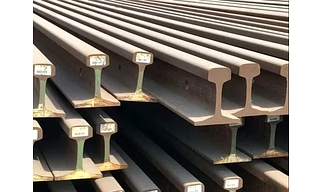
Mild Steel Rail Track Bars
These are widely used to manufacture railways, bridges, steel structures, ships and pressure vessels. These rail track bars are ISI certified and are available in various length, grade, thickness and weight. Further, our products are widely used to manufacture railways, bridges, steel structures, ships and pressure vessels. In addition to this, our products are used for fabrication work & industrial usage. With so many different shapes, steel bars can be used in an almost limitless number of applications. However, common uses include structure roofs, bridges, fences, cement reinforcement, furniture, metal grating, railings, and more.
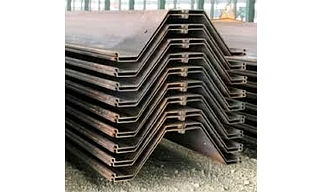
Z Sheet Pile
Z Sheet Piles are widely used for a variety of construction applications, including piling, embankment protection, foundations, and marine construction. Z Type Sheet Piles vs U Type Sheet Piles: On the one hand, Type Z is used in deep-wall construction to provide more durable building support and a stronger foundation. Z-type sheet piles are effective sheet piles. Therefore, they are often used in cantilevered and strapped systems. Z-shaped steel sheet pile is a common form of steel sheet pile. Its cross-section is Z-shaped and has good load-bearing capacity and stiffness. Z-shaped steel sheet piles are suitable for strata with relatively hard soil and certain supporting capabilities, such as gravel soil, clay, etc.
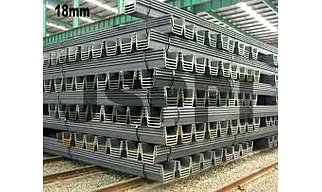
U Sheet Pile
U-steel sheet piles have diverse applications in construction, including retaining walls, cofferdams, deep excavations, flood protection, bridge and port construction, marine structures, and underground installations.
Bearing piles are used mainly to support vertical loads. steel sections can be used as bearing piles where soil and ground conditions preclude the use of shallow foundations and proves to be fast and cost-effective solution to the distribution of vertical loads.
THE MOST IMPORTANT ADVANTAGES ARE AS FOLLOW:
1. Easy connection to the superstructures.
2. Easy installation at site.
3. Faster Construction - Immediate follow on work.
4. Flexibility with pile sizes as per the load capacity.
5. No limit to pile length.
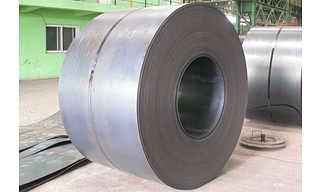
H R COIL
HR steel coils are the backbone of the construction industry. They are used to create structural elements like beams, columns, and girders in commercial and residential buildings. The exceptional strength and durability of hot-rolled steel make it an ideal choice for supporting heavy loads.
MS SQUAR BAR
MS square bars provide exceptional strength and load-bearing capacity, making them ideal for structural applications. Their robust construction allows for the creation of durable and stable structures that can withstand heavy loads and dynamic forces.
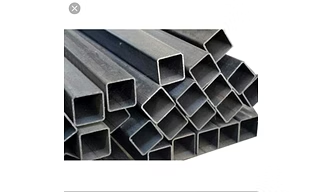
MS SQUARE PIPE
MS square pipes are widely utilised in building projects because of their exceptional blend of durability and cost-efficiency. These pipes are commonly utilised in the construction of building frameworks, support structures.
Building frames and trusses.
Support columns and beams.
Fencing and barriers.
Pedestrian walkways and bridges.
Industrial machinery support structures.
Architectural designs and facades
Interior and exterior railings
Decorative panels and partitions
Kitchen equipment and appliances
Outdoor sculptures and installations
Outdoor structures and canopies
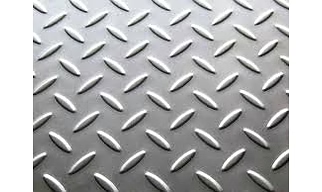
CHEQUER PLATE
Chequered plates are commonly used in the construction sector. They offer a combination of sturdiness and durability to floorings, ensuring safety. Anti-slip floorings reduce accidents and can withstand heavy loads and harsh conditions. Steel chequered plates have purpose in various industries. From using steel plates in construction to steel in automotive, chequered plates with their rugged designs are indispensable.
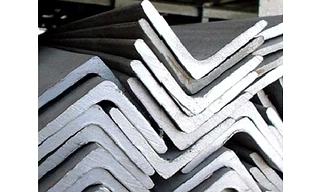
Mild Steel Angles
Angles are one of the most widely used products in the construction industry. It offers various characteristic features as a low-cost material.
Characteristics:
Wide dimensional range
Superior Weldability
Excellent surface finish
Close dimensional tolerances
Formable, and machinable
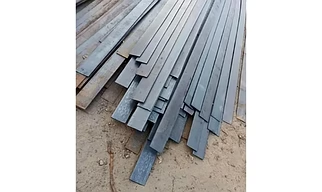
Mild steel FLAT BAR
Flat bars is basically used in building support materials. They are generally used for support braces, ladder hangers, gate latches, duct work, overhead doors, heaters and bracing. They can also be cut, welded, and shaped into various configurations to fit different applications.
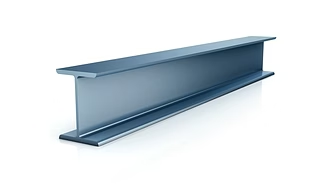
Steel i-beams
A Beam is a horizontal structural member used in framing to span an open space, often between beams that subsequently transfer loads to vertical members. When incorporated into a floor framing system, joists serve to provide stiffness to the subfloor sheathing, allowing it to function as a horizontal diaphragm.
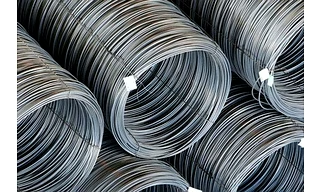
WIRE ROD
There are two main uses of wire rod: 1st is for building materials; 2nd, is used as raw material for wire drawing. Wire rod for building materials, including ordinary low carbon steel, high-quality carbon steel and carbon spring steel. The varieties are round and threaded.
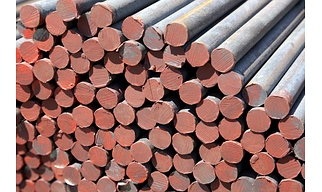
MS ROUND
MS round bars, also known as Mild Steel round bars, are one of the most widely used construction materials across industries owing to their versatility, strength, and cost-effectiveness. Mild steel is known for its low carbon content and is highly malleable, enabling easy moulding into various shapes and designs.
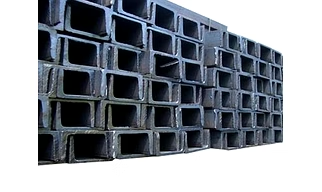
Mild Steel Channel
Steel channel is often used to build walls for things like garages, warehouses, workshops, and other metal buildings, where they are used like studs in conventional wood framing. The studs run vertically from the bottom plate of the wall to the top plate, and the bear the vertical load of the building.
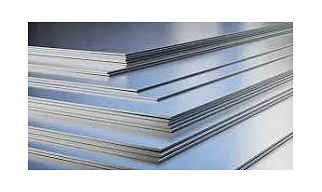
M S PLATE
Mild steel plates or structural steel plates are just sheet material made of steel that can be utilized to make an immense assortment of items and structures. It is both consumptions and scraped spot safe.
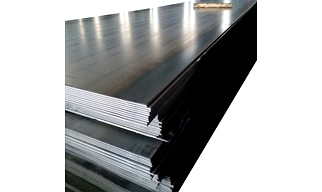
H R PLATE
Construction Industry: HR plate sheet is used in many areas in the construction industry. It is especially used in the manufacture of structural components such as steel construction structures, steel beams, columns, roofing, wall panels and floor slabs.
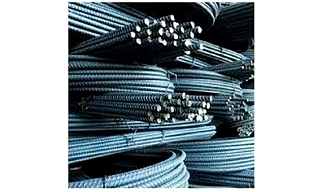
TMT BAR
The TMT bars are used to reinforce concrete structures in order to provide strength, and support, resist tensions along with making sure of structural stability. The innovative mechanical properties of TMT bars make them a suitable component of modern construction projects in the construction industry.

 GL Trustmark