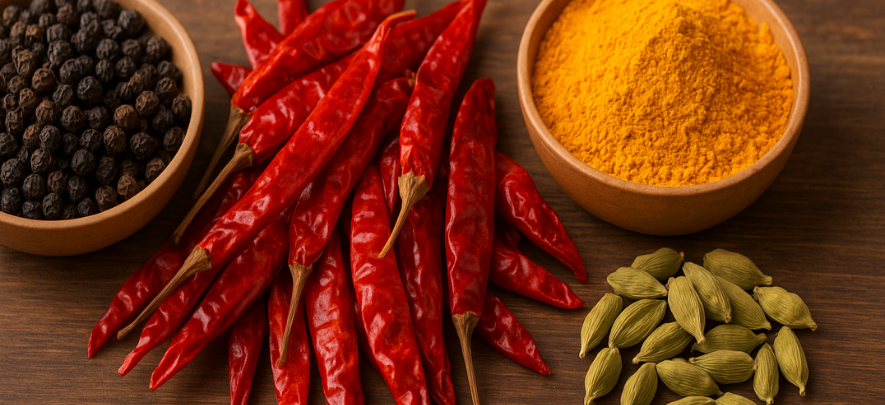



India has been the world’s spice hub for centuries. Its black pepper, fiery red chillies, golden turmeric, and aromatic cardamom form the backbone of global culinary traditions. For buyers and sellers, knowing how to find the right products, check their quality, and follow regulations can be the key to success.
1. Understanding the Global Demand for Indian Spices
-
Black Pepper: India’s Malabar and Tellicherry black pepper are valued in export markets for their high piperine content and strong aroma. These varieties are widely used in the food processing industry, packaged spice blends, and bulk supply for international buyers.
-
Red Chillies: Byadgi and Guntur red chillies are India’s most in-demand export varieties. They are key ingredients in spice mixes, sauces, and ready-to-eat foods, with steady global demand from both retail and industrial buyers..
-
Turmeric: India supplies around 80% of global turmeric, led by Erode and Sangli varieties. These are important for food manufacturers, nutraceutical companies, and global markets that prioritize rich colour and high curcumin levels.
-
Cardamom: A high-value crop with limited global production, Indian cardamom is valued for its intense flavor and oil content.
The Indian spices market is projected to keep growing steadily due to rising global preference for natural seasonings and health-linked food ingredients.
2. Key Quality Parameters Buyers Should Check
Regardless of the spice, ensure your supplier meets these benchmarks:
-
Moisture content: Typically under 12% for whole spices to prevent mould growth.
-
Active compound levels: Piperine for black pepper, curcumin for turmeric, capsaicin for chillies, volatile oil for cardamom.
-
Microbiological safety: Free from Salmonella, E. coli, and other contaminants.
-
Physical appearance: Uniform size, color, and absence of foreign matter.
Suppliers should provide a Certificate of Analysis (COA) for every batch.
3. Sourcing Best Practices for Sellers and Buyers
For Sellers:
-
Highlight the origin and variety (e.g., “GI-certified Malabar pepper” or “High-curcumin Erode turmeric”).
-
Maintain FSSAI compliance and consider optional certifications like ISO 22000, HACCP, or Organic for premium markets.
-
Provide export-ready packaging and labelling in accordance with importing country regulations.
For Buyers:
-
Verify supplier credentials and capacity for consistent supply.
-
Inspect for hygiene and quality control measures.
-
Request samples and lab test results before finalizing contracts.
4. Navigating Export Compliance
Exporting Indian spices typically involves:
-
Import Export Code (IEC)
-
APEDA registration for agri-exports
-
FSSAI license for food products
-
Phytosanitary Certificate from the Plant Quarantine Department
-
Compliance with grading standards from the Spices Board of India
For premium markets, additional certifications (Organic, Fair Trade) can boost credibility and access.
5. Market Opportunities
-
Black Pepper: Growing demand in the Middle East and EU for high-oil-content varieties.
-
Red Chillies: Popular in processed foods and cuisines worldwide.
-
Turmeric: Rising use in supplements, beverages, and functional foods.
-
Cardamom: Niche but high-margin, especially in luxury food and beverage sectors.
As global consumers seek authenticity and clean-label products, ethically sourced Indian spices hold a competitive edge.
Conclusion
Whether you’re an established exporter, a first-time spice trader, or a buyer - understanding the nuances of Indian seasonings is critical. Focusing on quality, compliance, and market trends can help you build profitable, long-term trade relationships.
Explore verified Seasonings & Spices suppliers on GlobalLinker.
Image credit: Generated by OpenAI’s DALL·E
Disclaimer: The views and opinions expressed in this article are those of the author and do not necessarily reflect the views, official policy or position of GlobalLinker.
Posted by
Supriya MathurMy endeavour is to help business owners digitise, network and grow easily. Towards this I help organise webinars, curate articles and answer queries via our help centre.
More Articlesby this author
Communications Manager
GlobalLinker / Mumbai, India
3°+ / 2318 Connections